

October 24, 2025
Lately, I've been seeing Korean characters in Japan much more often.
Compared to the past, there are now many instances where K-character goods are displayed on one side of select shops or where Korean characters collaborate with Japanese brands.
Initially, this applied only to brand IPs or popular IPs, but now, not only brands and popular IPs but also various other IPs are expanding their scope of activity throughout Japan.
This also means that the Japanese market is no longer a distant prospect.
However, given that Japan has a long history of character culture, fans have very high standards. It is difficult to be chosen based on cuteness or design alone; the story and emotions conveyed by the character must genuinely resonate.
Therefore, to enter the Japanese market, you need ‘this strategy’ rather than simply promoting the character externally.
For brands looking to expand overseas, including character businesses, the first thing to consider is a ‘localization strategy.’
No matter how charming a character is, it is difficult to move the hearts of overseas fans if it is not refined to fit the local culture and emotional tone.

Actually, it became a global trend with 'Baby Shark'PinkfongWhen expanding overseas, we produced and distributed content tailored to each country.
Rather than simply translating Korean content, we localized it by adapting it to suit overseas cultures, which enabled the stable establishment and expansion of the business.
Pinkfong's US localization
Based on the entry of the 'Baby Shark' song into the Billboard Hot 100 chart, proceed with music and animation businesses.
Produced the 2D animated series 'Baby Shark: The Big Show' with Nickelodeon and achieved the number one weekly viewership rating.
Pinkfong's localization in China
Developing homeschooling services (high-quality content, products) targeting Chinese parents in line with the education trend of high academic aspirations.
Production of an animated 'Traffic Safety Song' video targeting families through brand collaboration with Beijing Hyundai
Pinkfong's localization in Japan
Launch of webtoon 'Moonshark' on Japan's LINE Manga + Expansion of musical performances
Content targeting Generation Z and offline pop-up theme park operations
As such, localization is not simply about changing the language, but an essential process of understanding the emotional structure of that country and transforming the way characters are utilized.
Japan is a country that consumes characters centered on ‘empathy’.
As a result, fans often empathize with every single word, action, and facial expression of the character.
Therefore, when localizing, it is important to express characters through a language of empathy rather than translation.
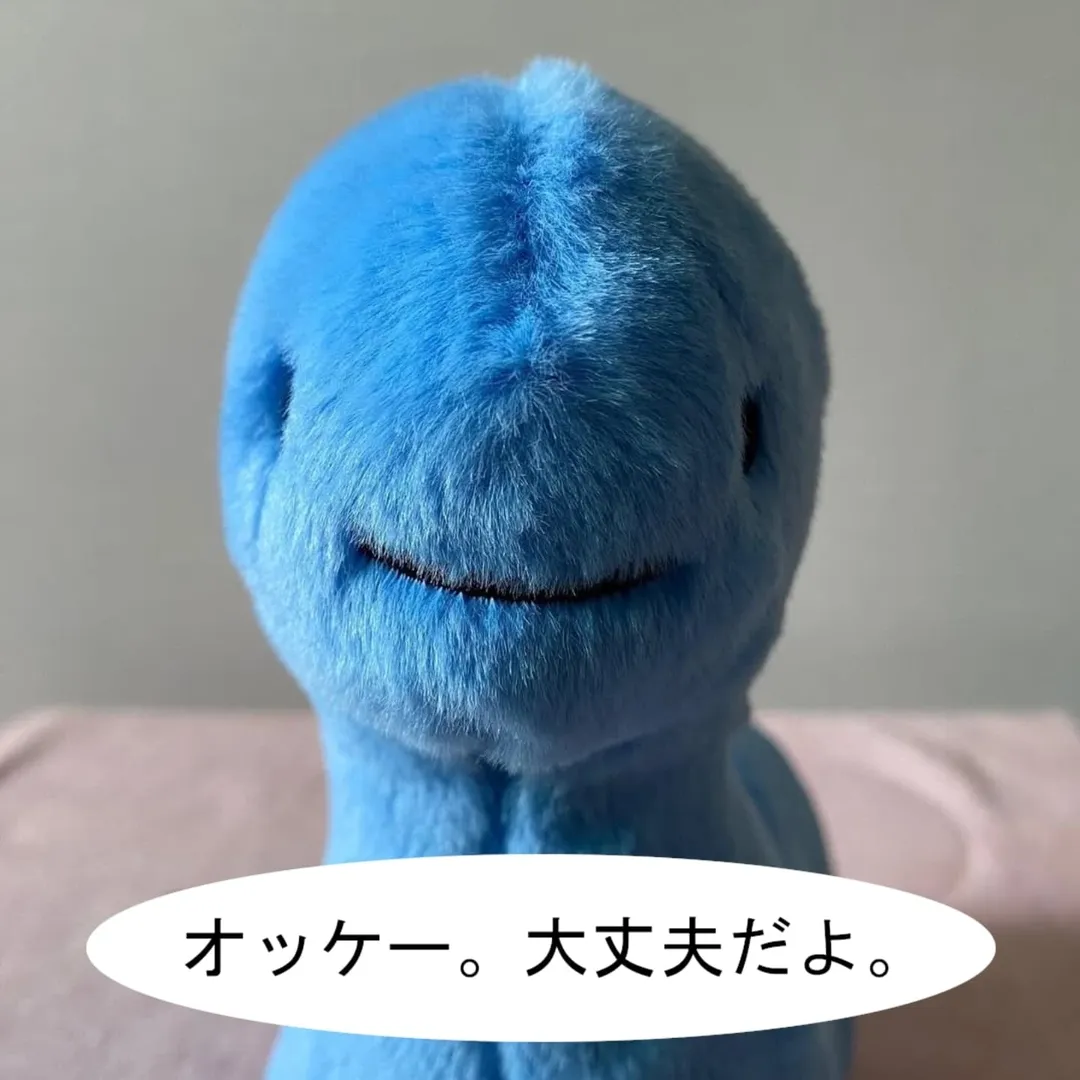
For example, in Korea, the phrase ‘Cheer up’ is familiar, but in Japan, words of gentle concern like ‘Daijoubu’ (It’s okay) are received much more warmly.
Matching the ‘feel’ rather than the ‘meaning’ of the language in this way can be considered the first step of localization.
Japan is also a country with distinct seasonal and regional sensibilities.
When cherry blossoms bloom, every brand releases a ‘Sakura Edition,’ and in winter, they incorporate seasonal imagery like snow or hot springs.
So, it is good to naturally blend the characters with Japanese sensibilities and trends.
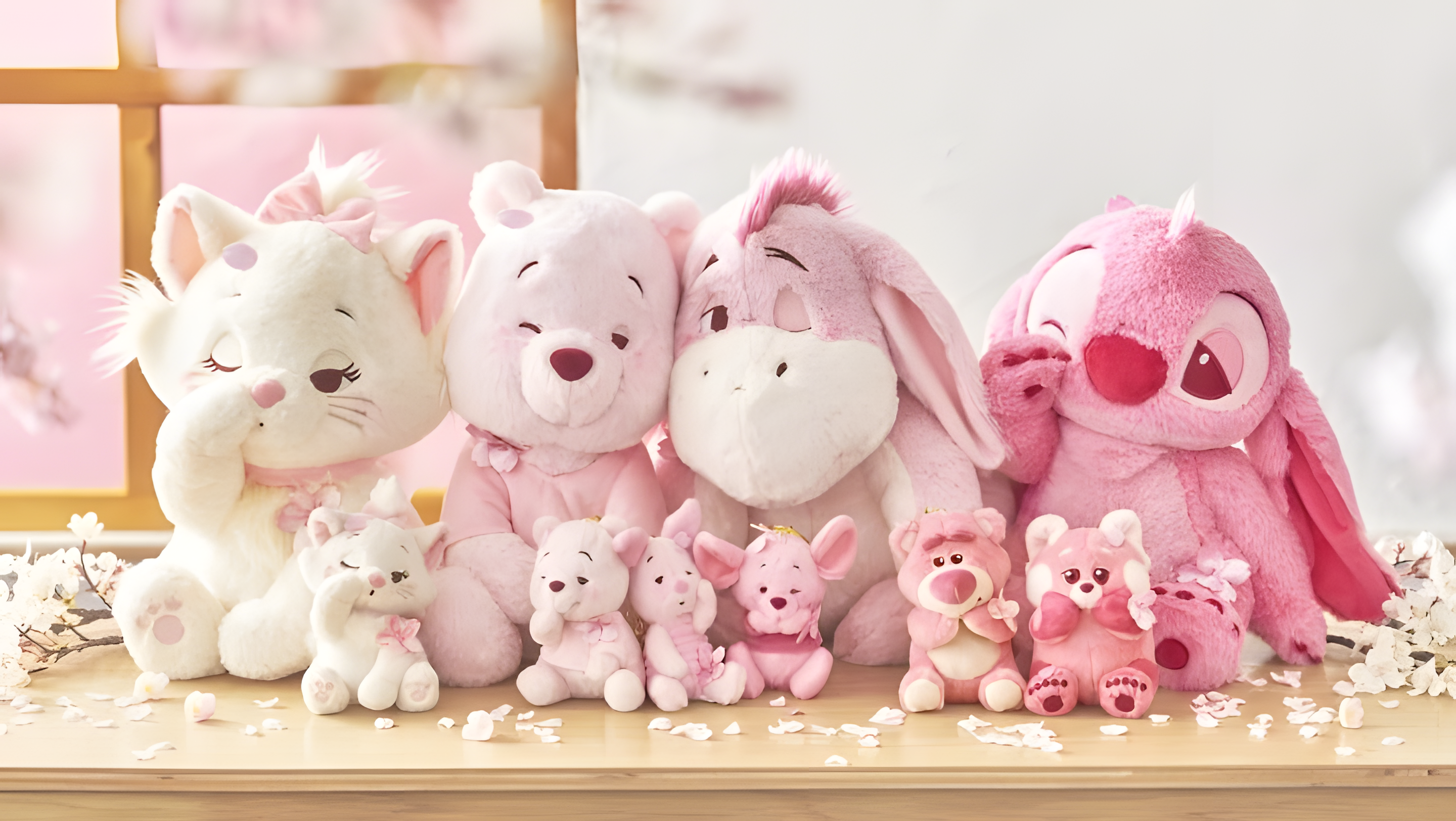 Source: 2024 Disney Store
For example, if a limited edition featuring characters and cherry blossoms is released during the peak blooming season, it is felt in Japan that the character's sensibility aligns with the flow of the seasons.
It is not simply seen as a pretty design, but is accepted as a ‘symbol of small memories’ that accompanies the season.
Through these meticulous details, fans develop a greater affection for the characters and look forward to seeing the new characters appear each season.
Localization that captures the emotions of the seasons and regions in this way allows the character to establish itself in the Japanese market not as a fleeting trend, but as a ‘being that shares emotions with Japanese people.’
Just because you have successfully introduced a character to the Japanese market doesn't mean it's all over. In fact, you could say that's when the real work begins.
Even just looking at brand collaborations, there are many things to take care of, from communicating with local partners and coordinating contract terms to managing schedules and social media promotion.
In particular, as Japan is a market that meticulously scrutinizes even the smallest details, such as wording and packaging methods, unexpected requests for revisions and repeated verification procedures are common.
There are also times when communication is not smooth due to language barriers or differences in work culture.
There are many cases where even a small misunderstanding affects the entire schedule.
If this situation accumulates, the burden on both your physical and mental health is bound to increase.

Especially for individual IP holders or small teams, completing a single project requires significantly more time and energy because they have to handle planning, production, and marketing entirely on their own.
Therefore, when entering the Japanese market, it is more important to have a system in place to consistently operate a global business than to have a strong character.
Rather than simply attempting a one-time entry, establishing a structure that enables continuous activity and management within the Japanese market is the key to a truly successful global expansion.
It is difficult enough to handle promotion, contract signing, and IP management on your own, so a stable collaboration structure might sound like a daunting prospect to IP holders.
If this process feels too vague and overwhelming, Inner Booth's Boost Up can be of great help.
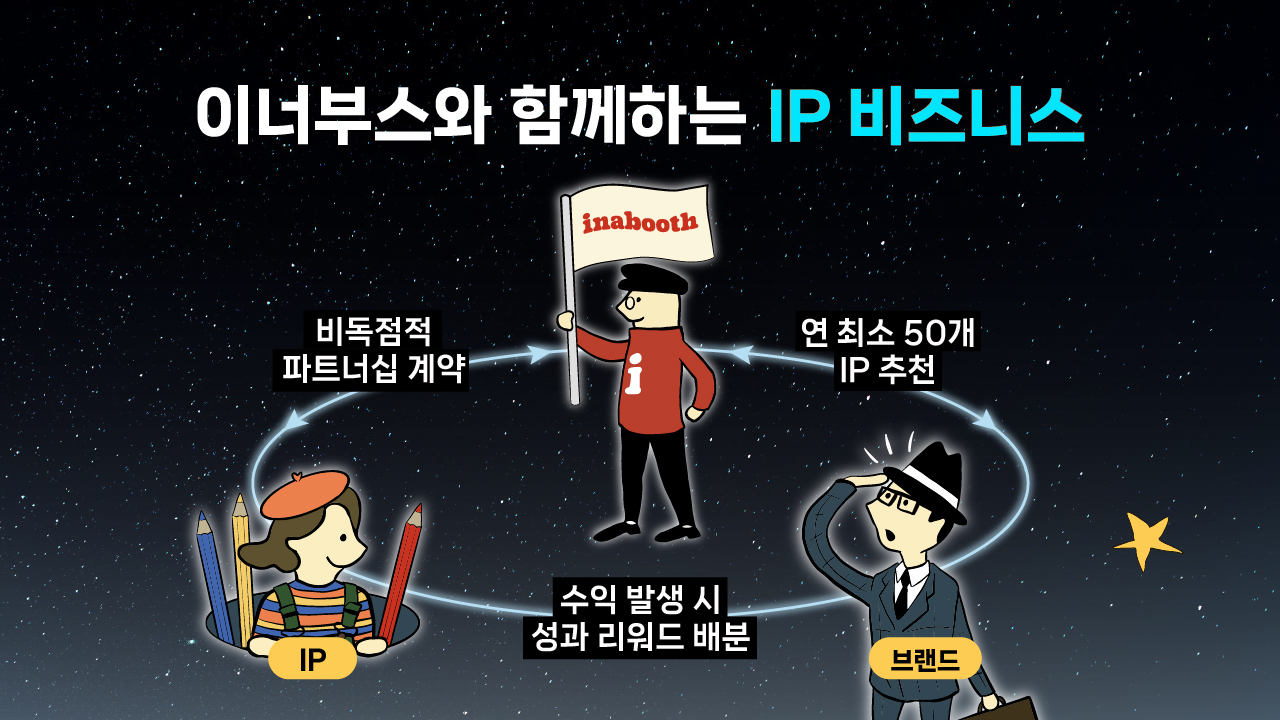
Boost Up is an IP growth support program that assists with brand connections to help IP expand into domestic and overseas markets.
In other words, you could say that Inner Booth acts as a reliable partner to handle IP businesses that are difficult to manage alone.
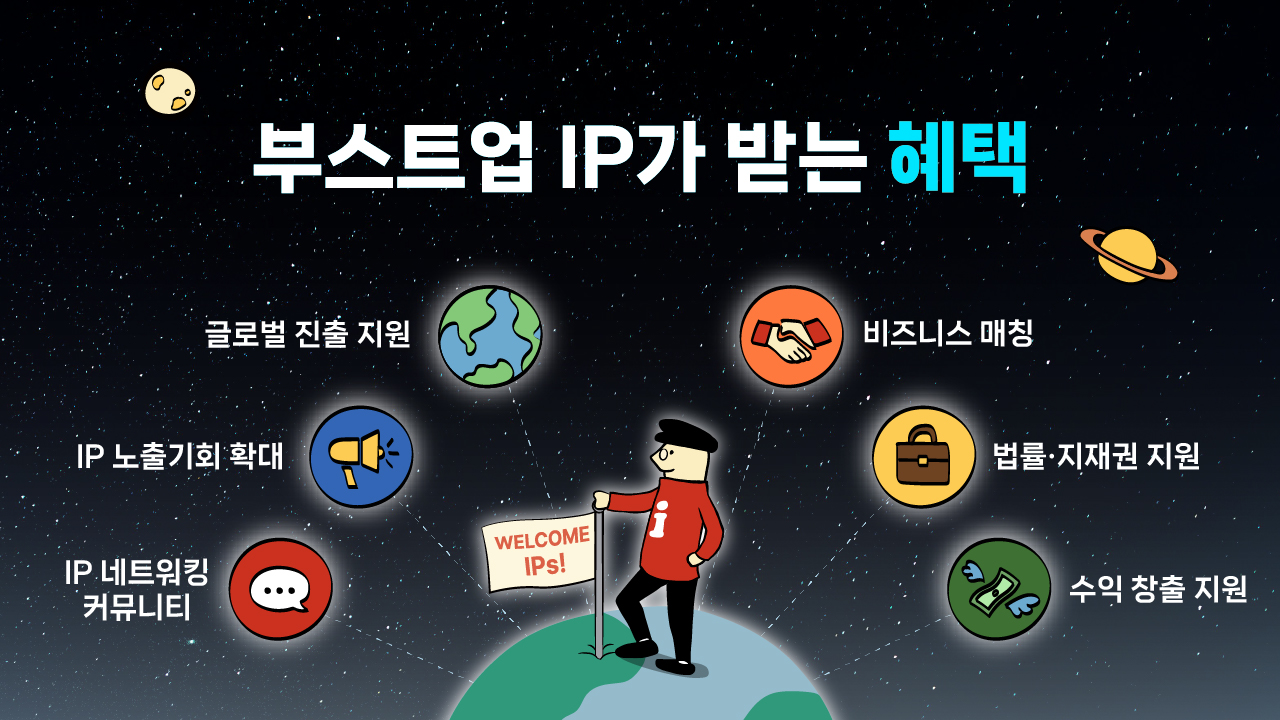
Not only can the character's popularity, value, competitiveness, and potential grow, but you can also engage in stable and reliable collaboration.
For more details about Boost UpHereI've covered it, so if you're curious, I hope you'll take a look💫
As interest in K-content continues steadily, the number of Japanese fans who view the emotional arcs and worldviews of Korean characters as fresh is also increasing.
Therefore, rather than waiting for collaboration proposals to come your way, it is all the more necessary to take the initiative and step into the market on your own.
As I mentioned earlier, the Japanese market is demanding, but opportunities for success will definitely open up for characters who approach it with sincerity and effort.
This one step now could be the start of expanding my character's world.
So now, rather than hesitating, I hope you will tell the characters' stories to the world in a way that suits them!
If the process is too hard or difficult, BoostUp will help you🚀
You May Also Like

June 1, 2026
August 13, 2026

August 4, 2026
How about these characters?