
June 1, 2026
Until just a few years ago, character collaborations were regarded as temporary events seen only in the food or fashion industries.
However, it is now breaking down genres and boundaries and has become deeply embedded in our daily lives.
You can easily find various character collaborations not only in household goods stores like Daiso and convenience stores, but also in cafes you frequent, the financial sector, and even art museums.
As the character market has grown, the public's standards have also risen, so it is now difficult to win over consumers with just a one-dimensional approach of simply putting the visuals of popular characters on products.
Therefore, you need to establish a clear strategy regarding which consumers to target, what type of collaboration to conduct, and what goals to achieve.
If you are an IP holder with a character, you need to consider which brand with which consumer base to collaborate with in order to expand the character's growth, direction, and worldview.
To achieve satisfactory results for both IP holders and brand partners, it is necessary to accurately identify current character trends and select the appropriate type of character collaboration and partner.
Today, we will examine the four collaboration types currently in the spotlight with specific examples and learn how to choose a partner!
The unique genre type is a collaboration where fields that seem completely incompatible with the character join forces.
Its key weapon is unexpectedness, a method that naturally becomes a hot topic by eliciting reactions like, "You're collaborating with this character?"

A representative example is the Vermeer 'Girl with a Pearl Earring' exhibition held at the Nakanoshima Museum of Art in Osaka in August 2026.
This exhibition features Vermeer's masterpieces, which are visiting Japan for the first time in 14 years, and features a collaboration with the animation 'Frieza di Lament'.
At first glance, they appear unrelated, but if you look deeper, you can see the connection between Vermeer and the characters.
First, 'Girl with a Pearl Earring' by the Dutch painter Johannes Vermeer has been loved for centuries, transcending time.
And 'Frieren of the Funeral,' which depicts the journey of Frieren, an elf mage who lives for over a thousand years, also deals with love and memories that transcend time as its main themes.
These two works, sharing the common themes of 'time' and 'memory,' garnered an explosive response on social media after releasing illustrations that reinterpreted their characters.
It was a combination that no one had expected—17th-century Flemish painting and modern Japanese fantasy manga—but that unexpectedness actually had the effect of attracting a new audience to both pieces of content.
TIP
The key to unique genre types is finding a 'partner whose worldview fits well' rather than a 'partner who sells well.'
The less forced the combination feels, and the more it complements each other's worldviews, the higher the buzz and fan acceptance become.
The worldview exchange type is a collaboration where two characters blend into each other's worldviews.
Unlike simply placing the faces of two characters side by side, it takes the form where one character is reborn through the other's visual language or the two worldviews naturally fuse.

The collaboration between 'Crayon Shin-chan' and Sanrio Characters is a good example.
Various merchandise such as figures, keyrings, and pouches have been released, with Crayon Shin-chan being reinterpreted with the pastel aesthetic of Cinnamoroll or Hello Kitty, and conversely, Sanrio characters entering the world of Crayon Shin-chan.
Ediya Coffee also exclusively launched this collaboration merchandise in the domestic F&B sector, and it became a hot topic as the fandoms of the two characters naturally overlapped.
The reason this type works well is that it has the effect of drawing each other's fandoms into the other's world.
It becomes a win-win situation as a crossover effect occurs where Crayon Shin-chan fans become interested in Sanrio and Sanrio fans purchase Crayon Shin-chan merchandise.
TIP
For the worldview exchange type, visuals and worldview fusion are important, not just simple name combination.
The more naturally the two characters' sensibilities, worldviews, and characteristics blend without clashing, the more enthusiastic the fans' reaction becomes, and the longer it can be remembered.
Target expansion is a method of utilizing characters to reach new consumer groups beyond the existing customer base.
From the perspective of brand partners, the goal is often to secure a long-term fandom rather than short-term sales.

The motor show collaboration between Hyundai Motor Company and 'Catch! Teenieping' is a prime example of this type.
Although the combination of a car brand and a children's animation character seems completely unrelated, Hyundai Motor Company targeted parents of children, who are the animation character's sub-target audience.
They styled the motor show booth like a Teenieping-themed kids' cafe to target both children and parents, and as a result, attracted family visitors.
In other words, they naturally exposed the brand to parents accompanied by children, thereby targeting future customers as well.
A similar trend is continuing in the sports industry as well.
Doosan Bears collaborated with the mobile game 'Brawl Stars' for Children's Day 2025.
By partnering with a popular game for the 10-20 generation that has 2.3 million monthly active users (MAU), we simultaneously targeted the existing baseball fandom and the kids' audience.
They naturally connected those fans to a new experience through a character who already had their own fanbase.
TIP
For the target expansion type, it is better to examine 'which characters are connected to the desired target' rather than 'which characters are popular?'
From the perspective of the IP holder, clearly presenting a specific consumer target when conducting brand collaborations can increase the success rate of the partnership.
Limited editions and collectibles are a method that leverages the psychology of "if not now, you won't be able to buy it."
It’s not about buying a product, but selling the experience of owning a specific moment.
Nowadays, consumers show a distinct tendency to respond to collectible value rather than simple products, and this type taps into that psychology most directly.
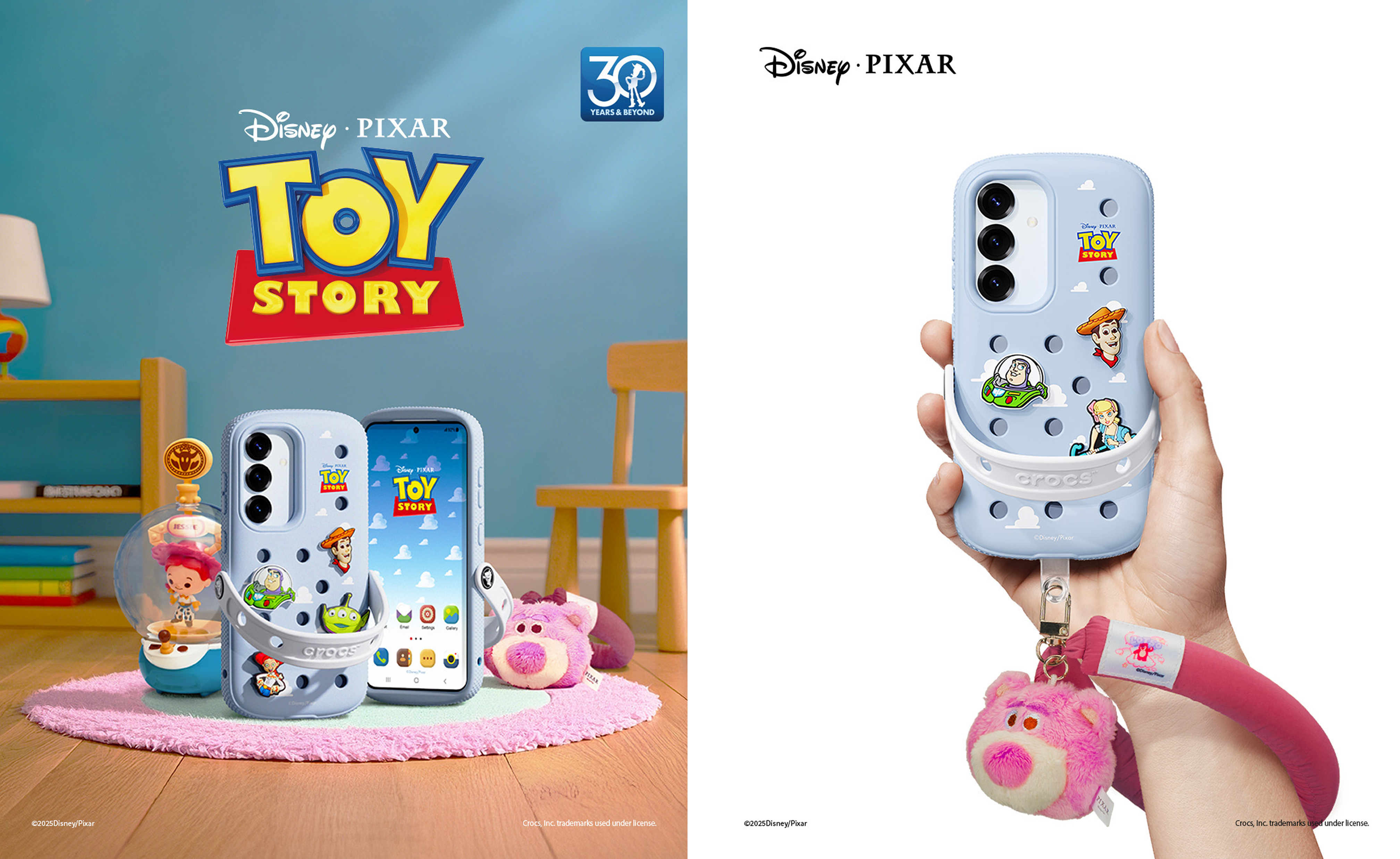
To celebrate the 30th anniversary of Toy Story in 2025, KT partnered with Crocs and Disney to unveil a special collaboration product.
The new product is the 'Galaxy S25 Crocs Toy Story Edition,' which was sold as a limited edition of 500 units.
It received great interest from consumers on the day of release, and all 500 units sold out.
Even though the product is an expensive, high-involvement product, it stimulated consumers' desire to purchase through limited editions and character collaborations.
The point to note here is that the scarcity of the merchandise is not just a simple marketing strategy, but becomes the core value of the collaboration.
Consumers express their identity as fans simply by owning the merchandise, and in this process, social media authentication and viral marketing naturally occur.
So, a limited editionFor the collectible type, the entire process of purchasing products must flow smoothly.
If a problem occurs at even one point in this process, the probability of drop-off during purchase conversion increases.
TIP
Limited editionCollectibles aren't necessarily good just because they are rare.
Controlling the quantity of limited editions, pre-promotion, and the operational method are very important.
If even one of the three points above is omitted, it may be perceived by fans as a cold marketing ploy.
Simply collaborating with popular things doesn't work anymore.
Only when the direction, target, and production style of the collaboration align with both the IP's worldview and the brand's identity can you simultaneously capture both buzz and sales.
From the perspective of an IP holder, you need to consider what type of collaboration can best bring your character's worldview to life.
Brand partners, too, do not simply bring in trendy characters, but are connected to their desired target.characterWe need to consider the recognition first.
Inner Booth supports granular search filters and match-up features to help IP holders and brand partners accurately align their needs.
If you are still unsure what type of collaboration is right for you, we hope you will find your direction with Inner Booth!
You May Also Like
June 8, 2026
March 11, 2026
April 28, 2025
How about these characters?