
March 11, 2026
Pop-up stores have now become an essential strategy that everyone, from indie characters to brand partners, considers at least once.
This means that more people now view pop-ups as an important opportunity for brands to grow to the next level.
However, even if you start preparing with excitement, you are bound to feel overwhelmed when you actually run into realistic obstacles.
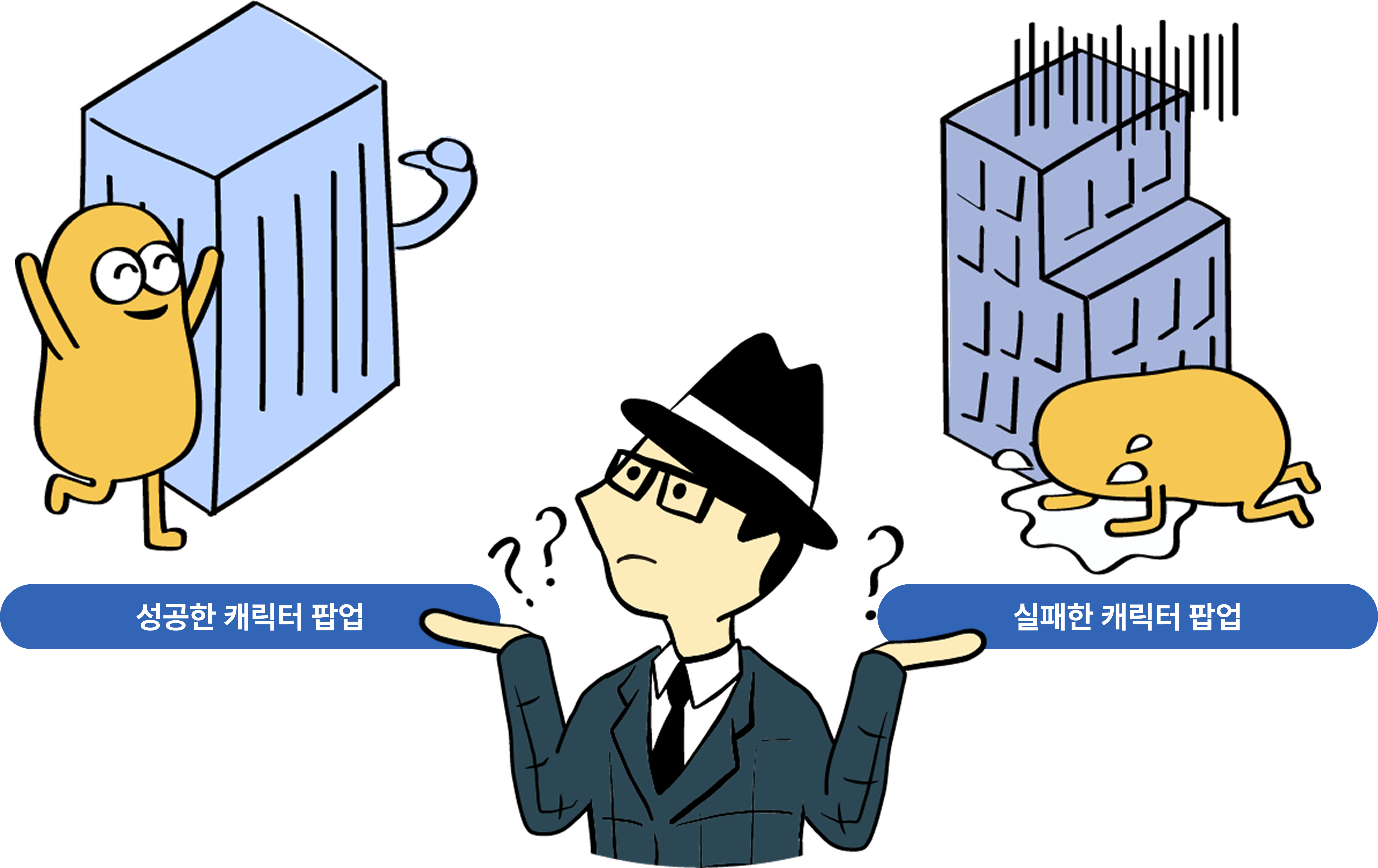
If you look around, some places are bustling with people while others pass by without a sound, so you start to wonder and worry, 'What on earth makes that difference?'
It is also difficult to be certain whether simply making good merchandise is enough, or if more effort should be put into space design.
In fact, if you look at the pop-ups that have recently received a positive response in the market, you can see that a relatively clear strategy is hidden behind their flashy exteriors.
For those of you currently struggling with preparing a character or IP pop-up, I’ll quickly and easily share three key points to keep in mind when planning!
Nowadays, pop-up stores are not just places to sell limited edition merchandise.
The events and experiences available for visitors to enjoy are becoming much more diverse and sophisticated than before.
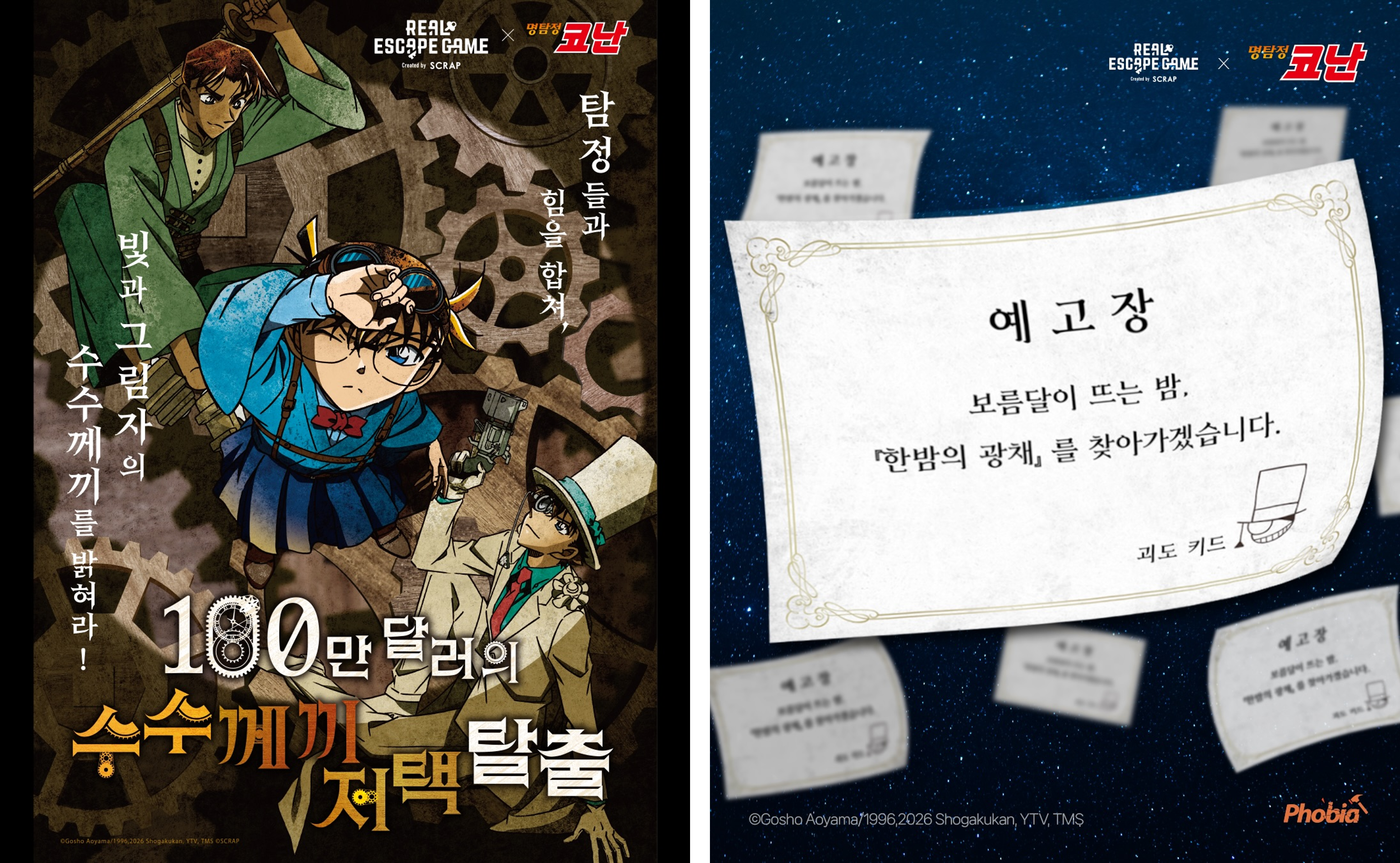
A prime example is the mystery pop-up from 'Detective Conan,' which recently garnered significant attention.
Following the release of the theatrical film *The Million Dollar Pentagram*, Detective Conan opened a mystery pop-up where viewers could solve follow-up cases themselves to continue the movie's lingering impact.
In keeping with the 'mystery' concept, it garnered significant attention by collaborating with 'Beat Phobia,' a renowned domestic escape room content company.
It is not just an exhibition to be viewed with the eyes, but one that allows fans to directly participate in the scene of the incident and immerse themselves deeply into the worldview.
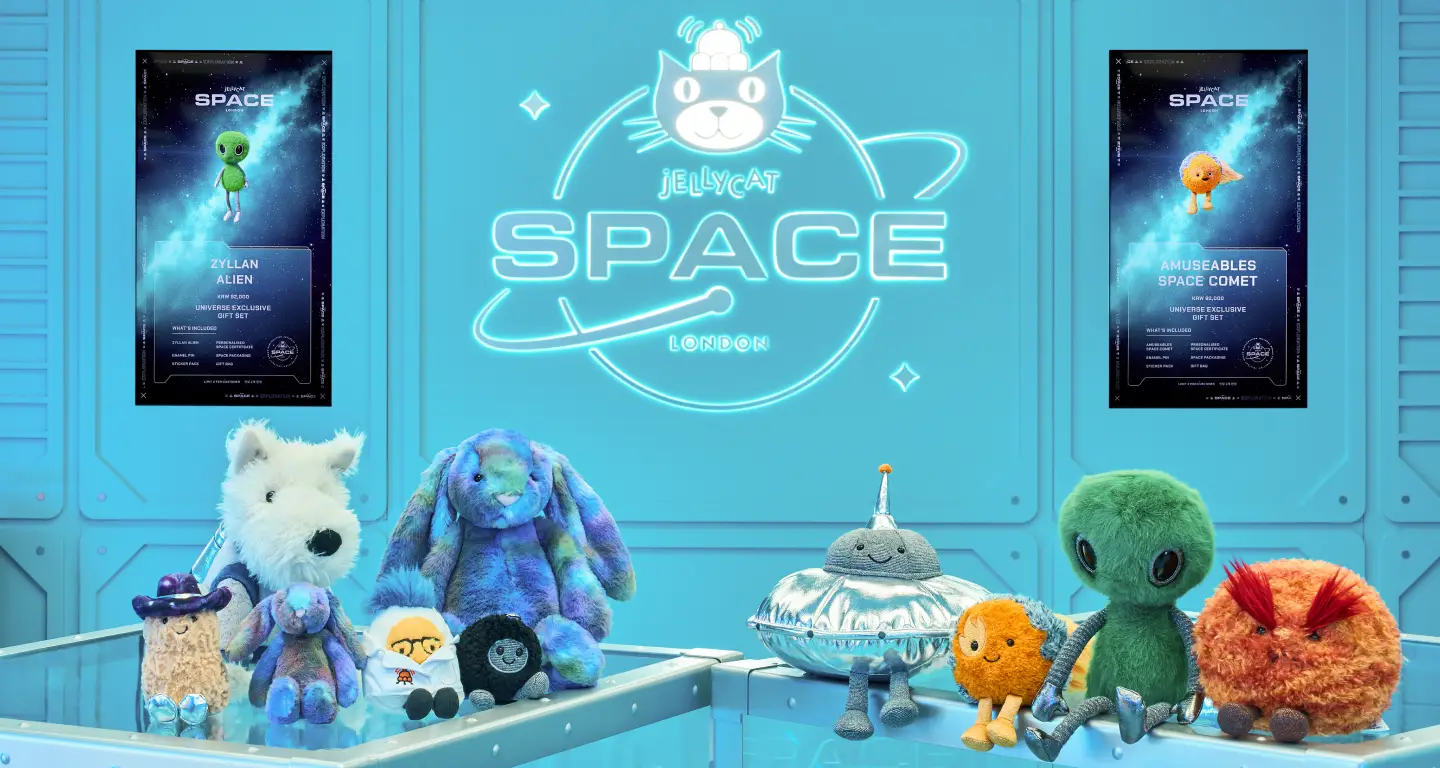
Just like the case of Detective Conan, the Jellycat pop-up is also worth noting.
Jellycat meticulously designed the entire process, from boarding the spaceship to immigration screening, based on the unique premise of a "journey to Planet Jellycat."
Thanks to this, visitors have had a special experience of becoming the protagonists of a story, rather than just simple consumers.
As you can see, if you look at the structure of so-called 'successful' pop-up stores these days, there is one thing they all have in common.
It is that it has a solid flow leading from 'worldview exhibition → experience → emotional immersion → merchandise purchase'.
In this trend, merchandise is no longer simply a product purchased with money.
This is because the meaning changes to 'a precious souvenir that brings the worldview I just personally experienced, moving and running around, into reality.'
At the same time, the lingering impression left by the pop-up space leads to spontaneous 인증샷 (proof shots) and viral spread on social media, which is also helpful in terms of promotion.
The biggest appeal of story-based pop-ups like this is that they do not end with just a one-time buzz.
TIP
When planning a pop-up, try to think first about "what kind of experience to create" rather than "what kind of merchandise to sell."
The clearer the worldview, the more distinct the direction of spatial planning becomes, and fan immersion and purchase rates naturally follow.
A major advantage of a well-structured, story-based pop-up is that it can be run consistently like a series, rather than remaining a one-time event.
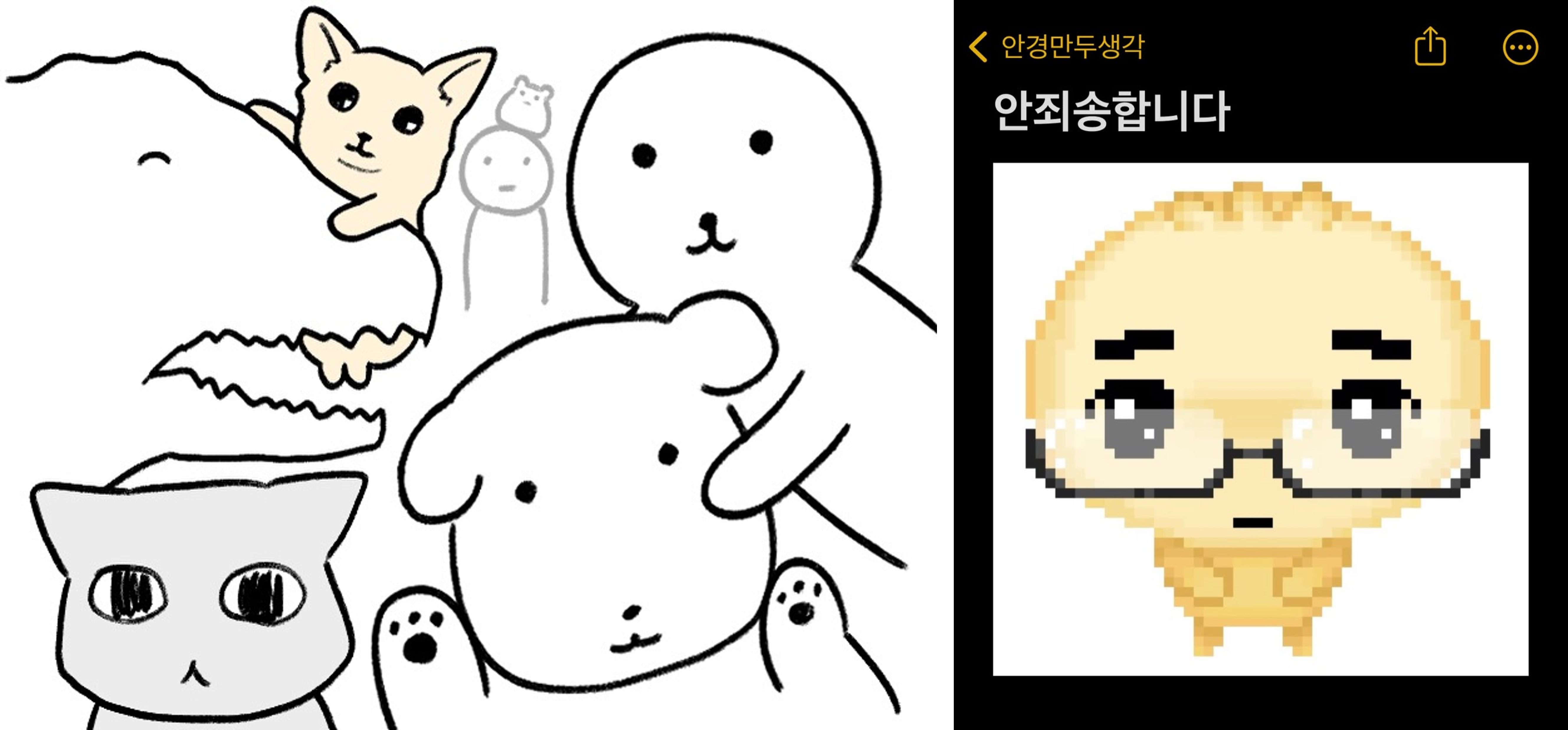
What do Ganadi, Glasses Dumpling, and the Broken Bear have in common?
The point is that a strong fandom had already been formed on social media first.
The pop-up store was merely a 'meeting place' that allowed fans, who had previously only communicated online, to meet the characters in person offline.
Conversely, we also see quite a few cases in the field where they hastily open a pop-up store before a fandom has been formed, only to be flustered by the response being lower than expected.
Ultimately, pop-ups are not a magical tool that suddenly creates a fandom where none existed, but rather a tool that deepens the existing fandom.
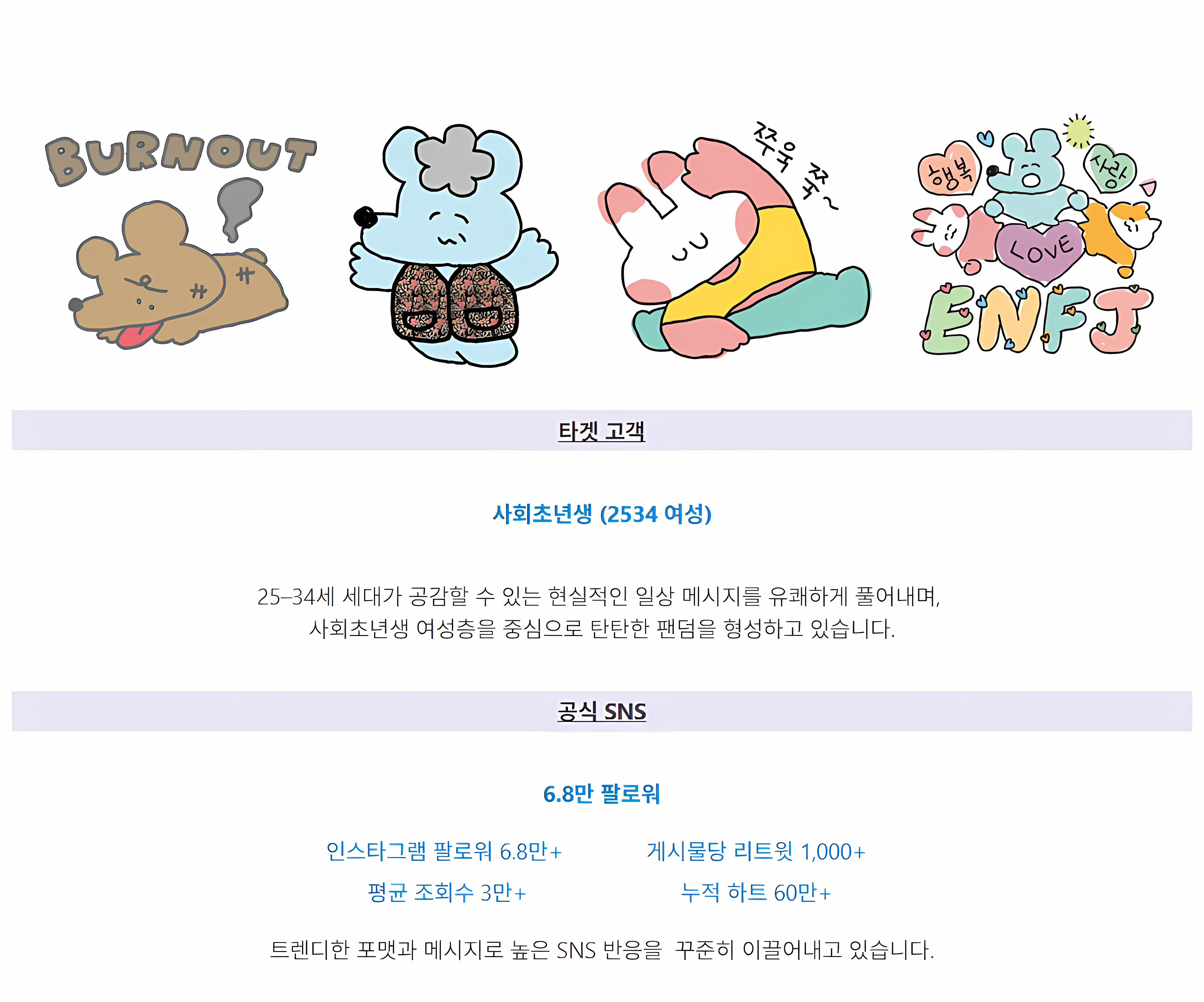
Therefore, before planning a pop-up, it is essential to first thoroughly examine the social media reactions to our character.
Metrics like Instagram saves, pair purchase rates, and emoji rankings show the actual 'temperature of the fandom' more honestly than simply having a large number of followers.
Especially when choosing characters to collaborate with, try checking 'behavioral indicators' first, such as comments or voluntary sharing.
The more records accumulate of fans actively reacting and engaging, the higher the likelihood of the pop-up's success becomes.
TIP
The effect of a pop-up store is maximized when there are already fans who will respond to our characters.
If you have a solid fandom, pop-ups are a powerful weapon above all else, but if your fanbase is still thin, I recommend focusing on building up through social media content first rather than attempting overly ambitious pop-ups.
One of the key variables that determines the success of a pop-up store is 'where it is held'.
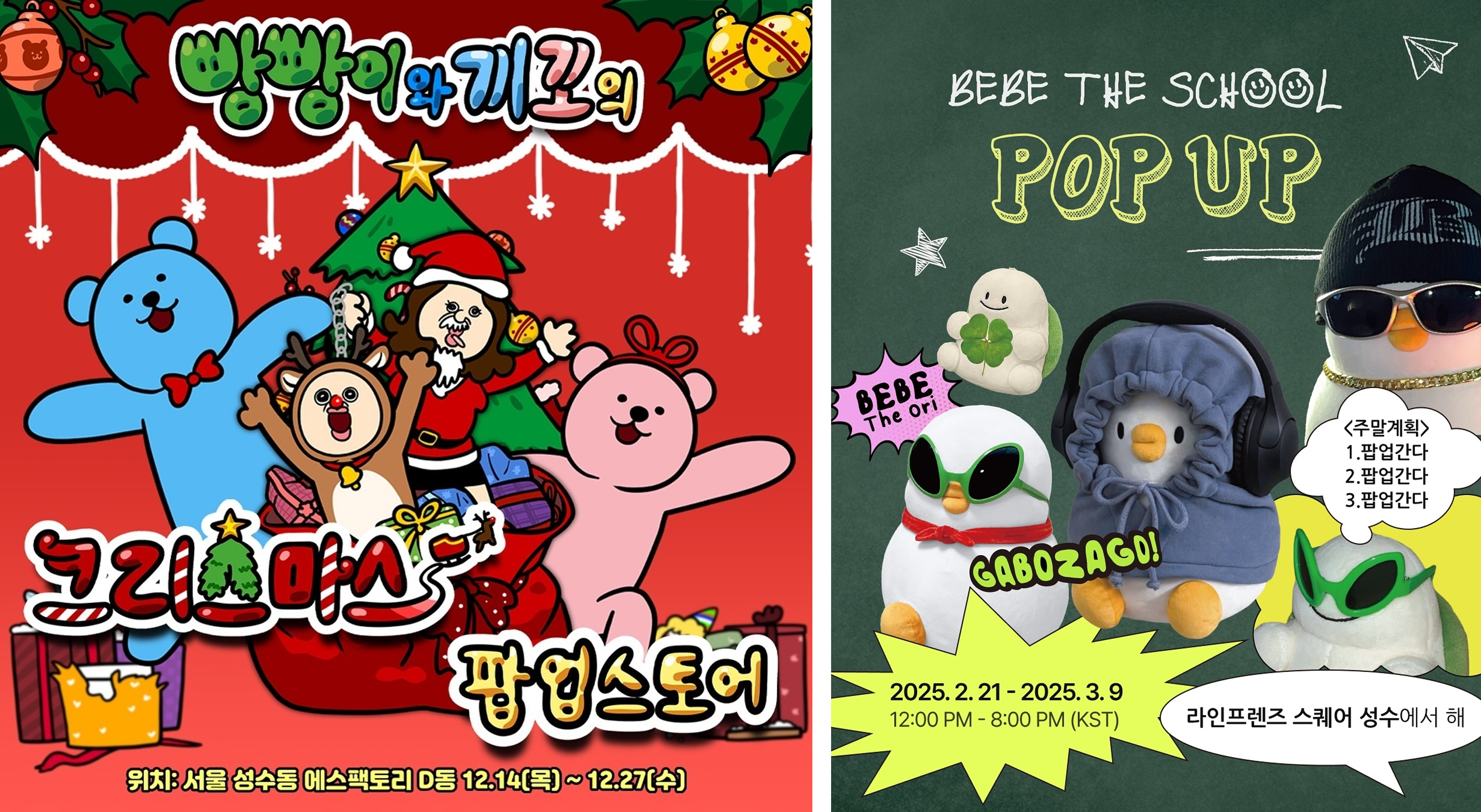
When considering a location for a pop-up, many people think of Seongsu-dong first, as if by prior agreement.
This phenomenon is not simply a matter of mood.
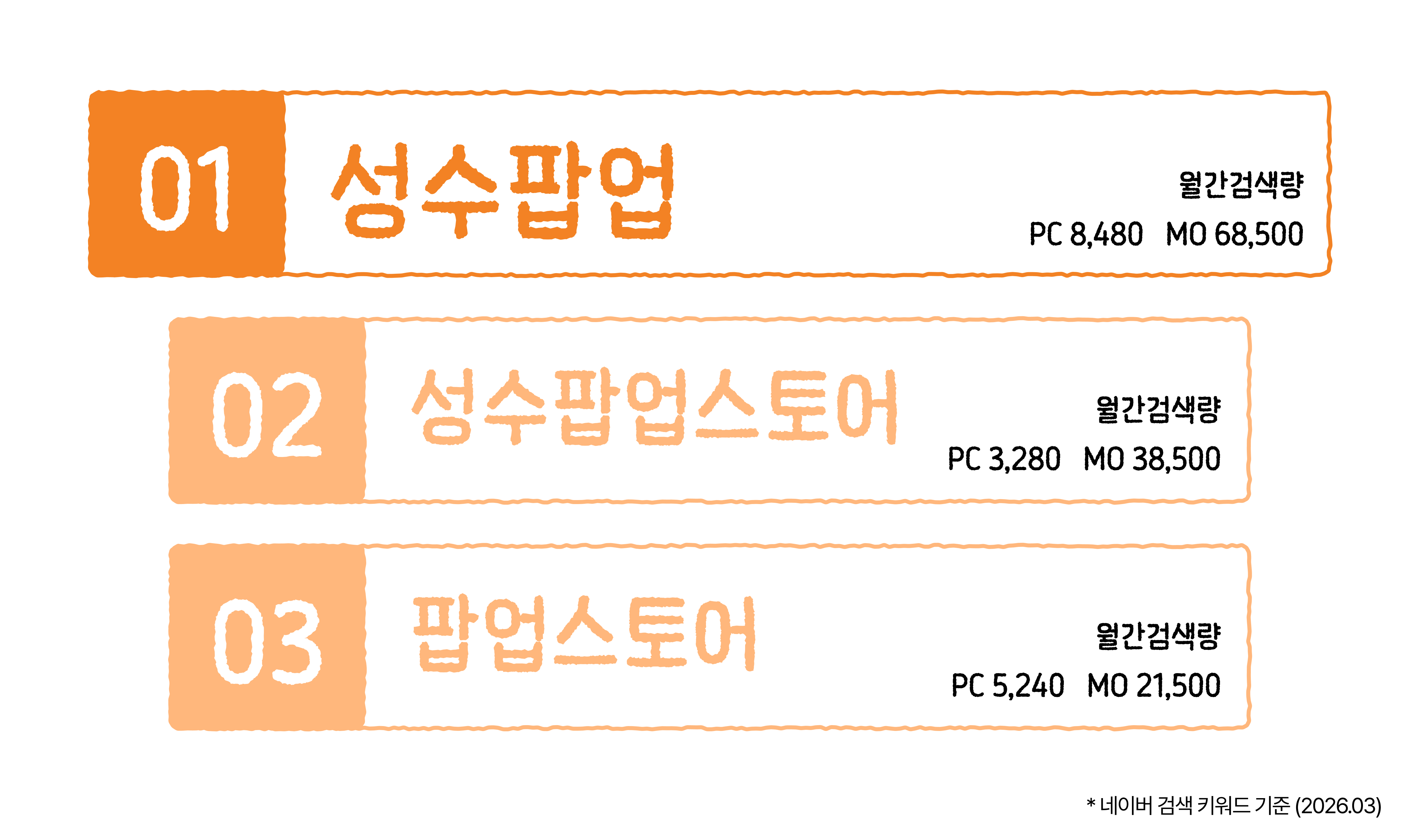
In fact, Seongsu-dong has already become an irreplaceable mecca for pop-ups, to the extent that the search volume for the keyword 'Seongsu Pop-up Store' moves almost in tandem with the total search volume for 'Pop-up Store'.
Since it is a place where the most trend-sensitive people gather, Seongsu-dong is always an attractive first choice for those who want to test the market's reaction to their IP most quickly and accurately.
 Source: B2ang's Daily Life Official Instagram (@b2ang_official), Bebe the Ori Official Instagram (@bebe_the_ori)
However, deciding on a location based solely on the 'neighborhood name,' like Seongsu-dong or Hongdae, is a bit risky.
This is because the characteristics of the customers gathering at each distributor and commercial district are distinctly different.
For example, The Hyundai Seoul has a particular strength in trendy character IPs that the MZ generation is enthusiastic about, while Starfield is much more advantageous for IPs targeting families or kids due to the large number of family visitors.
In addition, Yongsan iPark Mall is a good commercial district for fans centered on animation and authentic characters, while Hongdae AK Plaza is a good place for IPs with fandoms that delve deeply into specific artists or characters to gather.
In particular, recently, there has been a trend where major retailers are expanding dedicated pop-up spaces and putting a lot of effort into attracting brands.
Therefore, the better the character IP aligns with the nature of the location, the more attractive collaboration opportunities with distributors naturally increase.
TIP
The key is to closely understand where my character's main fanbase usually spends their time.
Because a truly good place is not simply a 'trending hot spot,' but a 'place where my fans actually visit.'
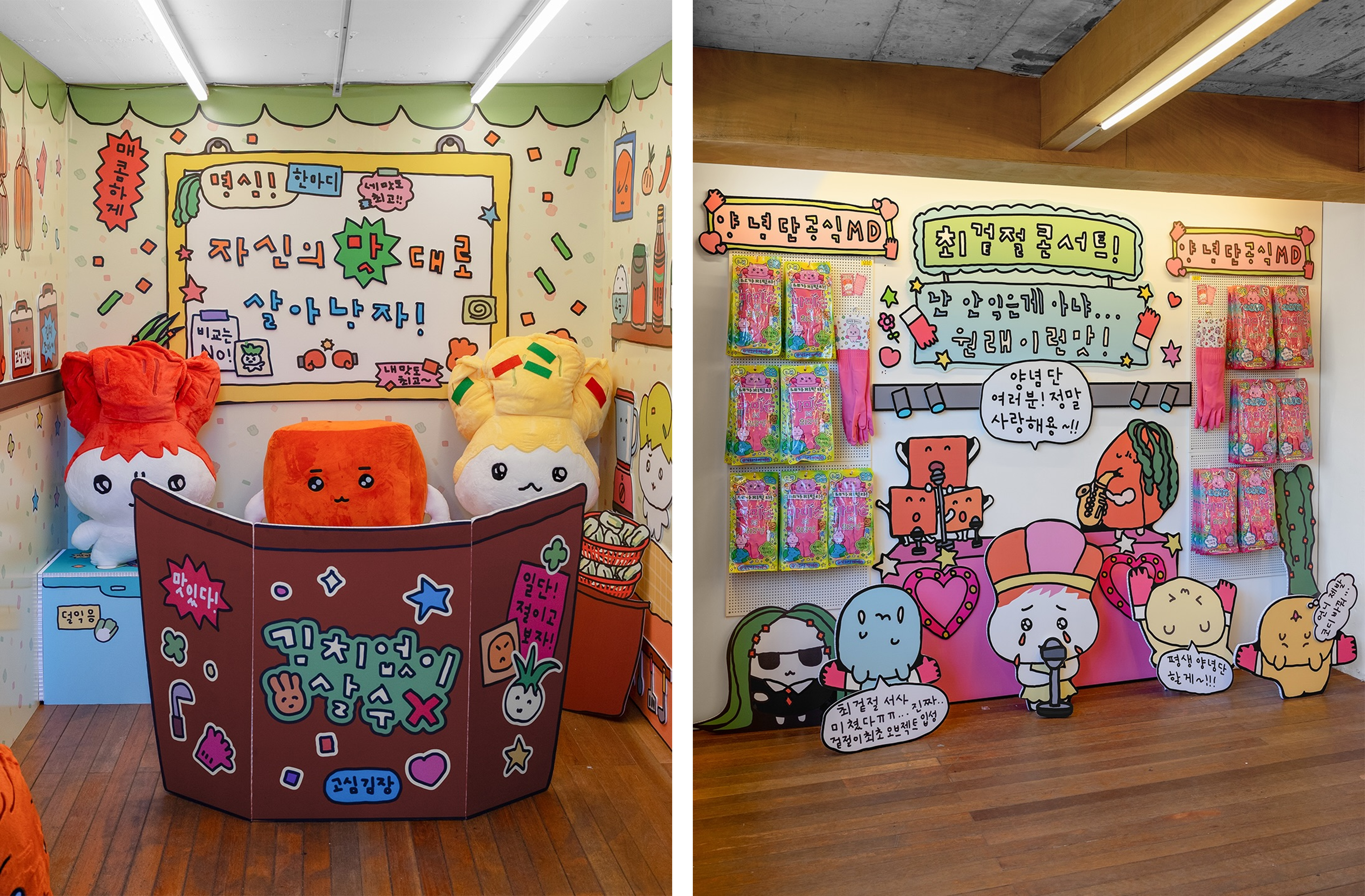
Ultimately, if you want to achieve true success with a pop-up store, you must first meticulously design 'how to allow people to experience our story' before decorating a flashy space.
This is because pop-ups are no longer just one-time events that are opened and then forgotten.
 Source: Choi Gosim Official Instagram (@gosimperson)
A well-made pop-up further strengthens our character's fandom, opens up opportunities for new collaborations, and serves as a solid stepping stone for expanding into the licensing business.
For brands and artists who place the value of experience rather than merchandise, the warmth of the fandom rather than vague fame, and the depth of a worldview rather than mere buzz, the pop-up market of 2026 will be a greater opportunity than ever before.
I sincerely hope that the flow I outlined for you today will serve as a small but sure guide the moment your precious character and brand first meet the offline world!
You May Also Like

June 1, 2026
June 8, 2026
April 28, 2025
How about these characters?