
June 8, 2026
Looking at recent merchandise trends, they are moving beyond mere promotional items or free gifts with logos; the merchandise itself is becoming the reason for consumers to purchase.
In fact, recently, a 'Chambungeoppang' hand warmer that perfectly replicates the shape of the snack sold out all 8,000 units within just four days of its release, demonstrating the power of merchandise.
As such, consumers are now paying not for the product itself, but for the experience, fun, and stories contained within the merchandise.
In particular, as the culture of 'goods you want to collect' and 'goods you want to show off' spreads, especially on social media, goods are establishing themselves as a form of content.
So recently, consumers' standards for merchandise are gradually rising.
Design is a given, but to be chosen by consumers, you must be able to persuade them why you created the merchandise, what meaning it conveys, and what the relationship is between the brand and the character.
So, what are the commonalities of recently successful merchandise, and what are the characteristics of 주목받는 merchandise trends?
The most notable trend recently is the way brands actively embrace fresh external perspectives rather than remaining confined internally.
In the past, it was common for brands to produce merchandise using their logos or characters, but now, there is a growing trend of brands providing their IP as a material and creators adding their own sensibilities and ideas to create new works.
 Source: Idus, Lotte Well Food Official Instagram (@idus.me, @lottewellfood)
A prime example is the collaboration between Lotte Well Food and the handmade platform, Idus.
Lotte Well Foods opened its long-loved brand IPs, such as Kkokkalcon, Mon Cher, Custard, and Mallangcow, to handicraft artists, who reinterpreted them in their own unique ways to showcase a variety of goods.
Kkokkalcon keyring, Kancho keycap, CustardMalangkau perfume is the result of that.
The reason this approach is attracting attention is that new ideas have emerged that would be difficult for a brand to conceive of on its own.
Even with the same IP, completely different results are produced depending on 'which creator interprets it,' and consumers accept it not as a simple brand product but as a work imbued with the creator's individuality, resulting in less resistance.
In the past, the focus was on merchandise that visually displayed the brand image, but recently, there has been an increase in merchandise that allows you to touch, hear, and even experience the scent.
The Lotte Well Foods keycap keyring and perfume mentioned earlier can also be considered goods that reflect these characteristics.

Keycaps, in particular, don't just stop at simply looking at the brand or character; their addictive sound and feel make you want to keep using the merchandise.
In this process, consumers naturally come into repeated contact with the brand.
The same goes for perfume.
It provides consumers with a new experience by making them remember the brand through scent rather than sight, and enables them to remember the brand through the sense of smell.
As such, brands recently are planning and producing merchandise while taking into account even the moment consumers use the goods.
It is becoming an important point not just to create pretty merchandise, but to design it so that the brand can be experienced through all five senses.
Goods that engage the five senses are more likely to be memorable than goods that merely stimulate the sight, and their collectible value also increases.
While sight is easily forgotten amidst a flood of information, the tactile sensation of touching something directly or the memory of smelling a specific scent lingers much longer.
In fact, when we smell a particular perfume, memories from the past come to mind, or we naturally associate a specific brand with the texture of objects we frequently use.
Ultimately, merchandise that utilizes the five senses plays a role in helping consumers remember the brand for a longer time.
It makes people naturally think of the brand by using it repeatedly in their daily lives, rather than simply looking at it once and passing by.
Nowadays, consumers do not often purchase goods simply because they are 'cute' or 'pretty'.
People only open their wallets when they are convinced of the story behind the merchandise, the reason it was created, and why this brand and IP came together.
The best example of this is the Korea Mint Corporation's currency merchandise.
The Korea Mint Corporation has created new merchandise such as money ballpoint pens, money dried pollack, and money cushions using discarded currency byproducts.
The reason these goods are special is because of the story behind them, rather than the products themselves.
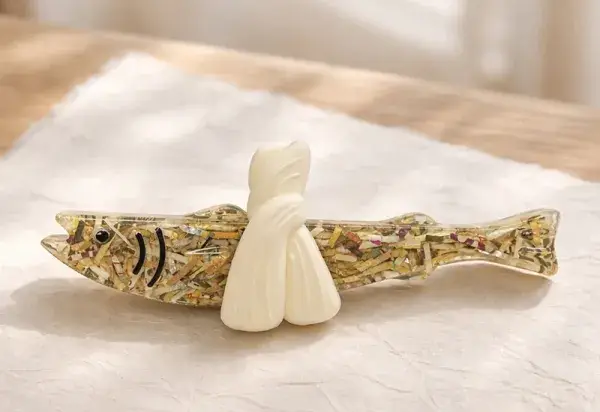
According to the Korea Mint Corporation, approximately 500 tons of currency waste are generated annually, and about 100 tons of that is by-products from the Mint Corporation.
Originally, most of it was incinerated, but the Korea Mint Corporation sought to reduce incineration costs while adding new value to the byproducts.
And that is how the currency merchandise came about, which contains the meanings of 'luck' and 'amulet' and attracts money with money.
Currency merchandise is not simply a product made from recycled waste.
Currency that was destined to be discarded is being reborn in a new form, and by adding meanings such as 'wealth flowing in' and 'bringing good luck,' it is delivering special value to consumers.
So, if you look at recently successful merchandise, they don't focus solely on design.
We design everything together—from why the merchandise was created and what message it conveys to what meaning consumers can discover—to make consumers empathize with the brand's message and purchase the merchandise.
Well-made merchandise makes consumers seek it out first, share it on their own, and remember the brand.
It allows you to build brand presence and leave a lasting impression on consumers in a much more natural way than advertising.
However, not all merchandise has a good effect.
If you look at recently successful merchandise, there aren't many cases where they gained attention solely for their pretty design.
We are seeing a greater response when we reinterpret brand IP, incorporate experiences that stimulate the five senses, or tell stories that resonate with consumers.

In other words, the production of merchandise is becoming closer to a process of considering 'what experience to deliver to consumers' rather than 'what product to make.'
Memorable merchandise can only be created by designing together what emotions consumers will feel when looking at the goods, what stories they will discover, and how they will use them in their daily lives.
Ultimately, the core of today's merchandise trends can be said to be not making products, but creating brand experiences.
If you want to create merchandise that consumers will voluntarily want to own and share, think about the experiences and stories to include before you start producing the goods✨
You May Also Like

June 1, 2026
March 11, 2026

April 28, 2025
How about these characters?