
November 5, 2025
These days, character collaborations in brand marketing have gone beyond a trend and become an everyday strategy.
Coffee brands are featuring cute characters, beauty brands are releasing limited edition merchandise, and fashion brands are showcasing packaging utilizing characters.
However, not all character collaborations receive an enthusiastic response from consumers.
While some collaborations receive an explosive response, others quietly fade into obscurity.
This difference is not simply due to the character's recognition or popularity.
It depends on 'how well the brand understood its identity (POP) and differentiation (POD) and planned accordingly.'
Ultimately, what determines the success of a character collaboration is not ‘how much more famous a character is used,’ but ‘whether the character that best suits the brand is used.’
So, in today's post, I’m going to look at the importance of POP and POD that brand partners must keep in mind when planning character collaborations.
Originally, POP (Point Of Parity) and POD (Point Of Difference) are concepts frequently used when explaining brand positioning.
However, at a time like today when character collaborations have become established as part of brand strategy, these two factors are serving as the criteria for collaboration success.
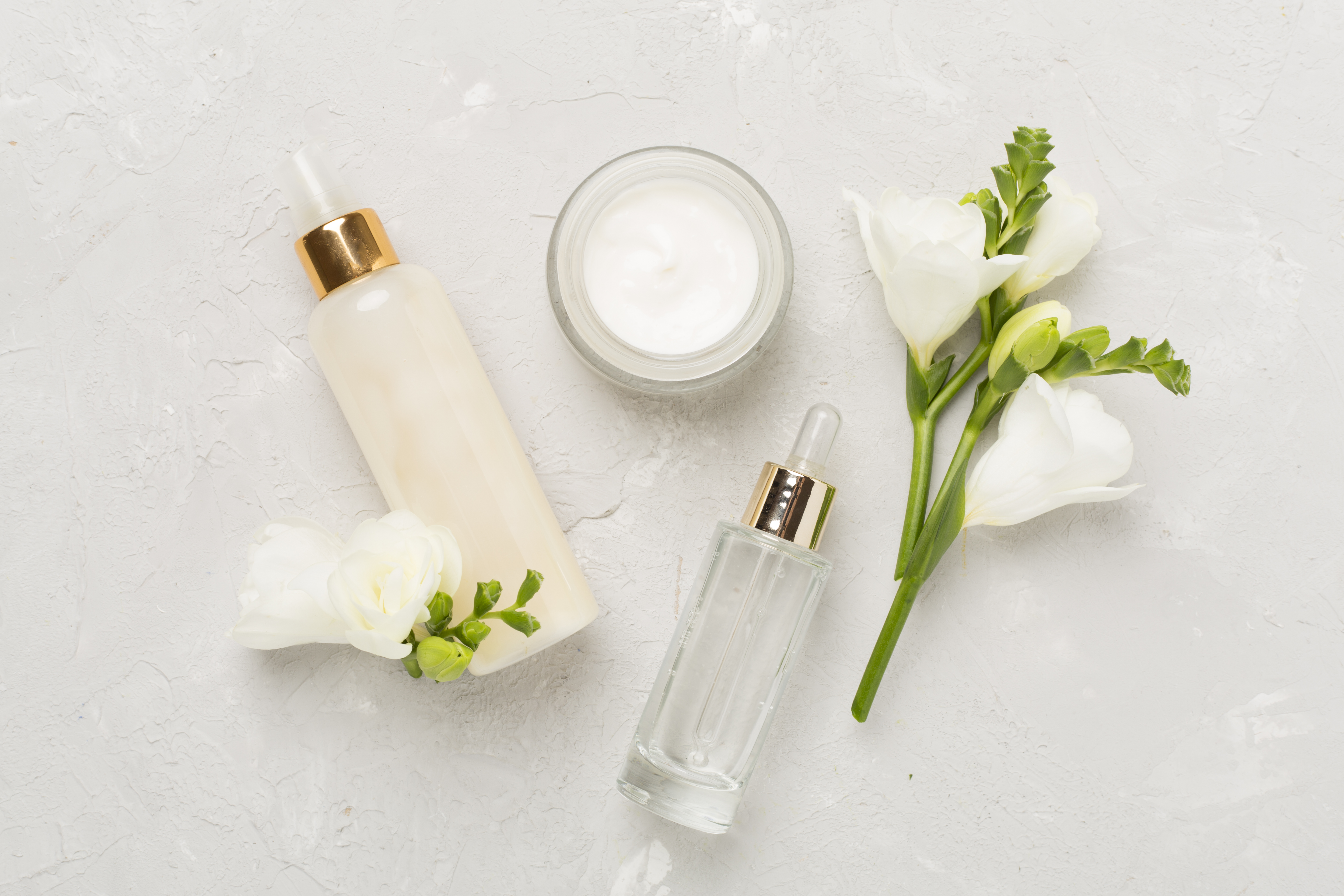
POP refers to the characteristics that brand partners have in common within a specific category.
Simply put, since this is a common brand characteristic across the industry, it is also something consumers fundamentally expect.
If it is a cosmetics brand, you can highlight safe ingredients, hygiene, and basic quality through POP.
On the other hand, POD stands for Point Of Difference, which refers to the differentiated attributes and unique strengths of a brand.
In other words, this is also the reason why consumers feel that 'this brand is different.'
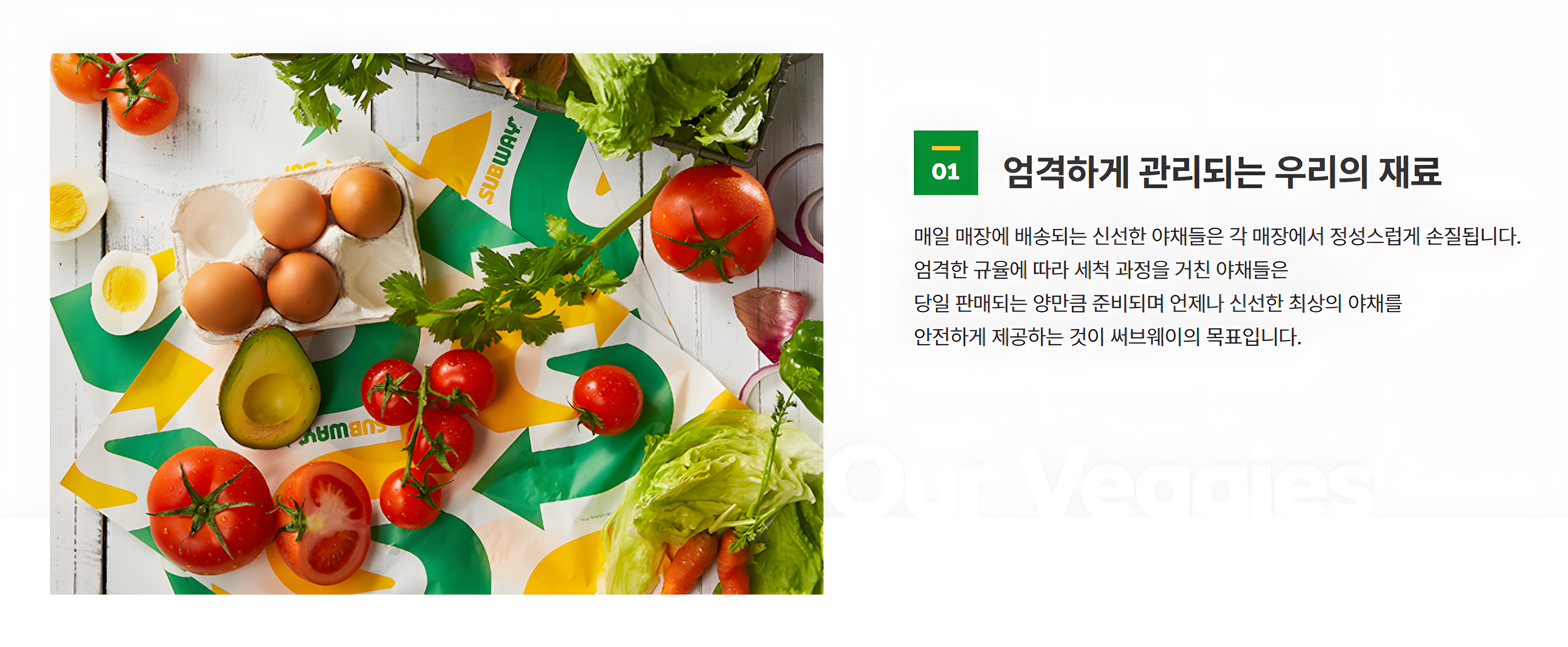 Source: Subway Official Website
To explain using Subway as an example, Subway has a POP in that it is fast food, but unlike other brands, it has a POD in that it uses fresh and low-fat ingredients.
This concept applies just the same when planning character collaborations.
This is precisely why character collaborations do not succeed based solely on cute and trending combinations.
POP is a default that brands must adhere to in the market.
Even when collaborating with characters, the brand's essential image and credibility must be maintained.
If this aspect wavers, consumers will feel that it is "not like the brand."
on the other way POD creates novelty through charactersare you.
If a brand can utilize a character's sensibility or story to showcase new fun or emotional depth that didn't exist before, that clearly becomes a POD.
These days, in character collaborations, there are many cases where POD disappears and only POP remains.
This was also a problem with character collaborations that has been recurring for a long time.
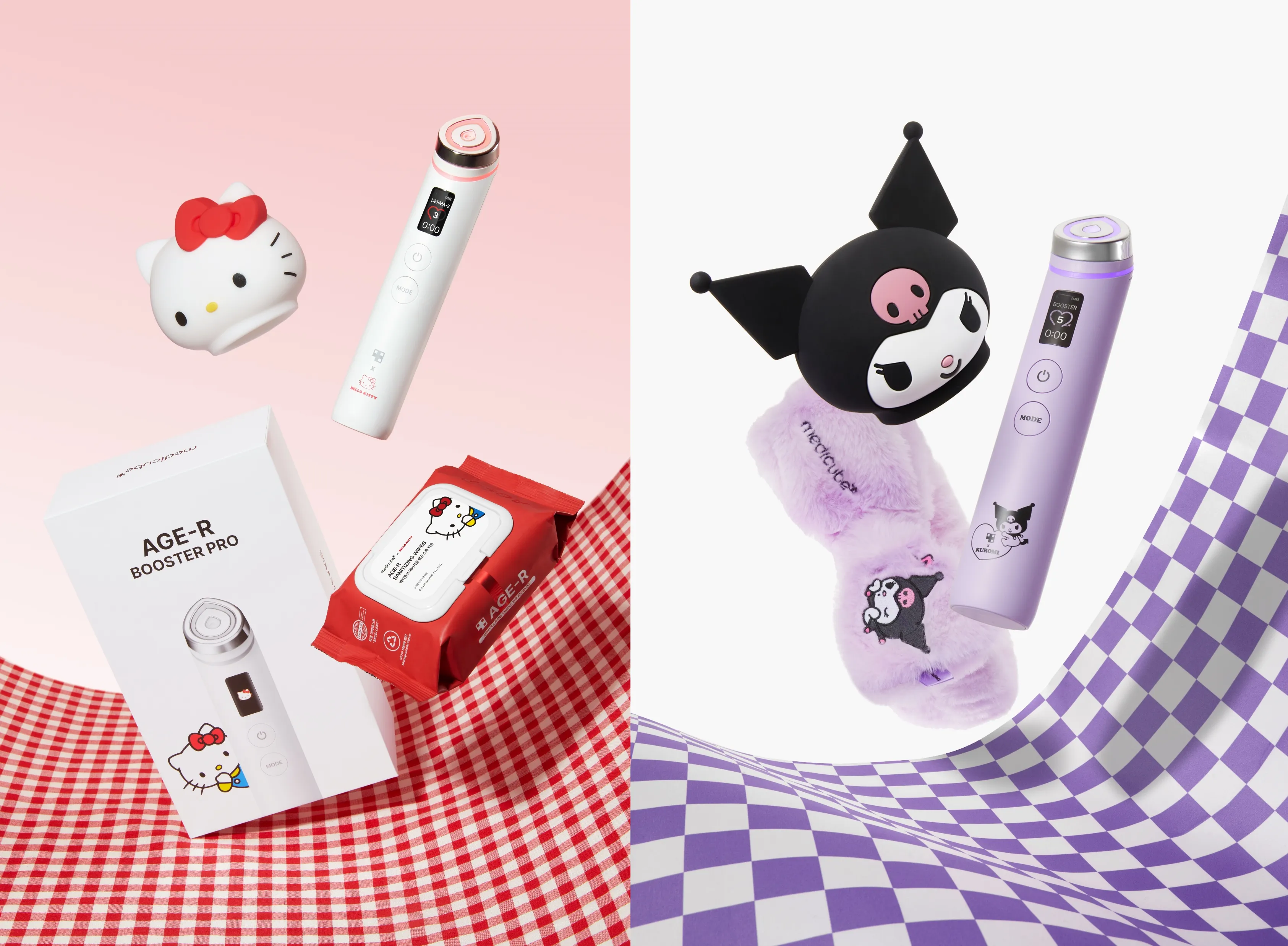
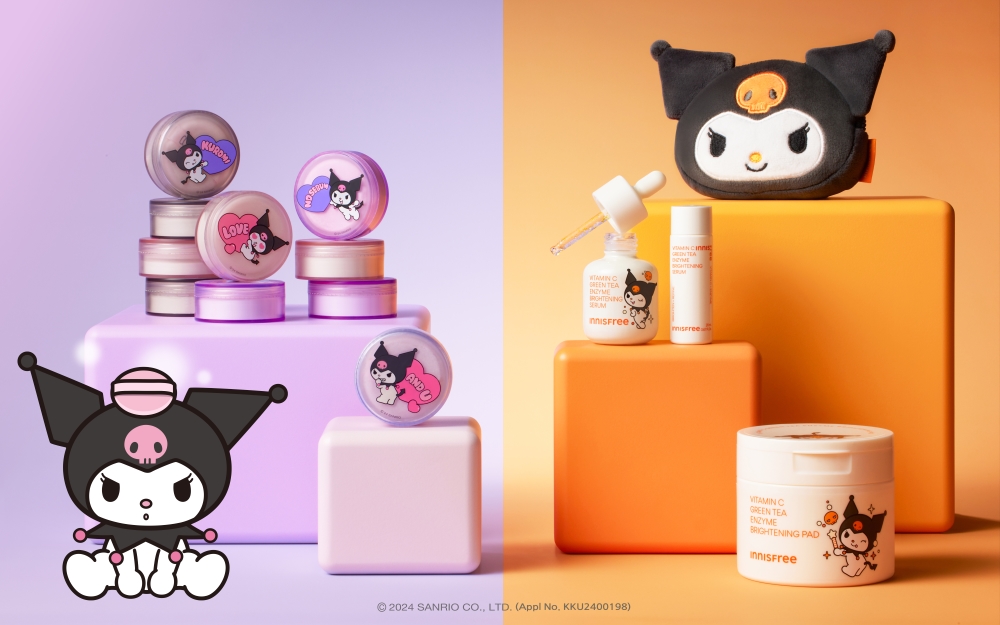
This phenomenon is particularly evident in the beauty industry, where there are many collaboration products.
Character collaborations, which were fresh at first, are being repeated with similar combinations, goods, and compositions.
Last time, you collaborated with Beauty Brand A, right?
This time, collaborating with Fashion Brand B…
It is not unreasonable for consumers to react this way.
When the same character collaborates with multiple brands in succession, the freshness that was initially a POD quickly turns into a POP, that is, a natural combination.
In such cases, while there may be a short-term increase in sales, in the long run, it can weaken the brand's unique image and give consumers the perception that "they are all the same."
There is a common mistake that most brand partners make when planning character collaborations.
It is simply combining characters with branded products and services.
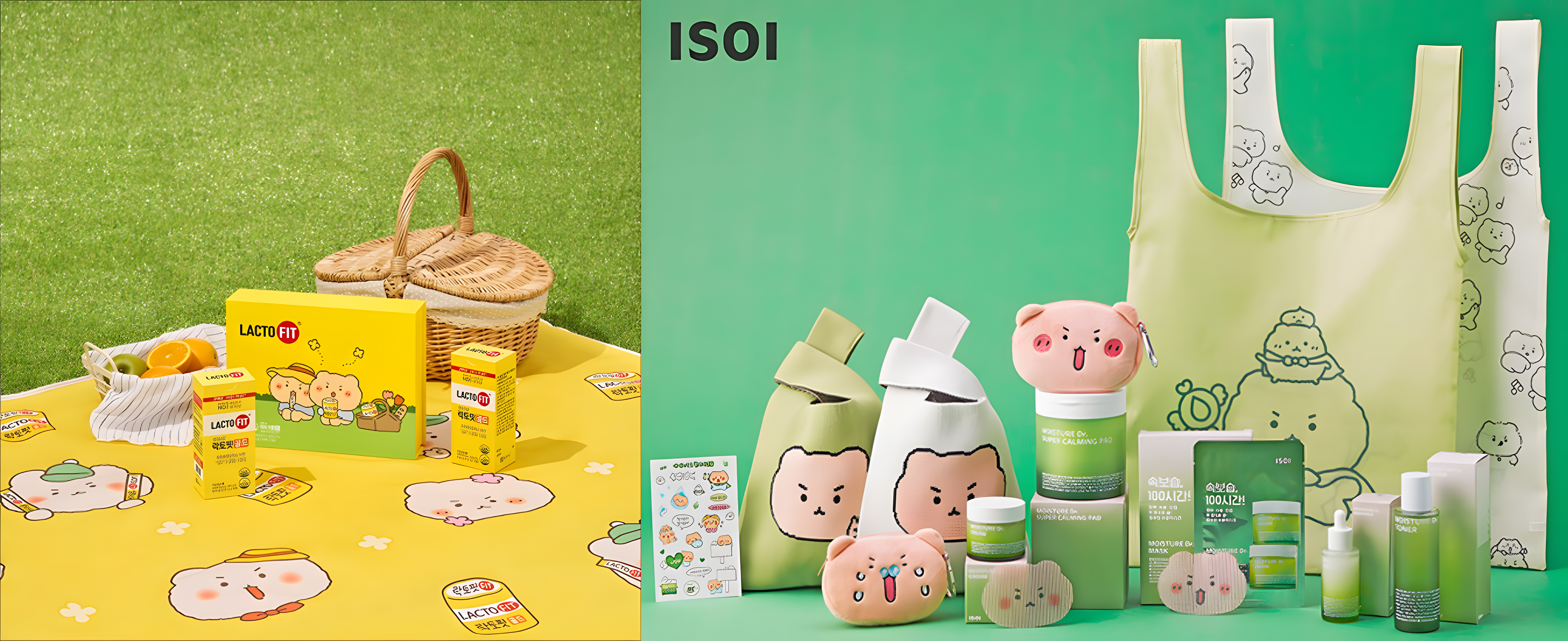
Examples include producing limited edition goods or putting the character on the packaging by relying solely on the character's popularity.
Of course, this method helps with short-term buzz and sales.
However, if you rely solely on the popularity of a character, it is easy for consumers to see it as "this brand this time, that brand next."
In the end, only POP remains and POD disappears.
A truly successful character collaboration is created when the character's worldview and the brand's message connect naturally.
in other words, Instead of simply utilizing characters, you must invite them into the brand world and create the brand's POD together.
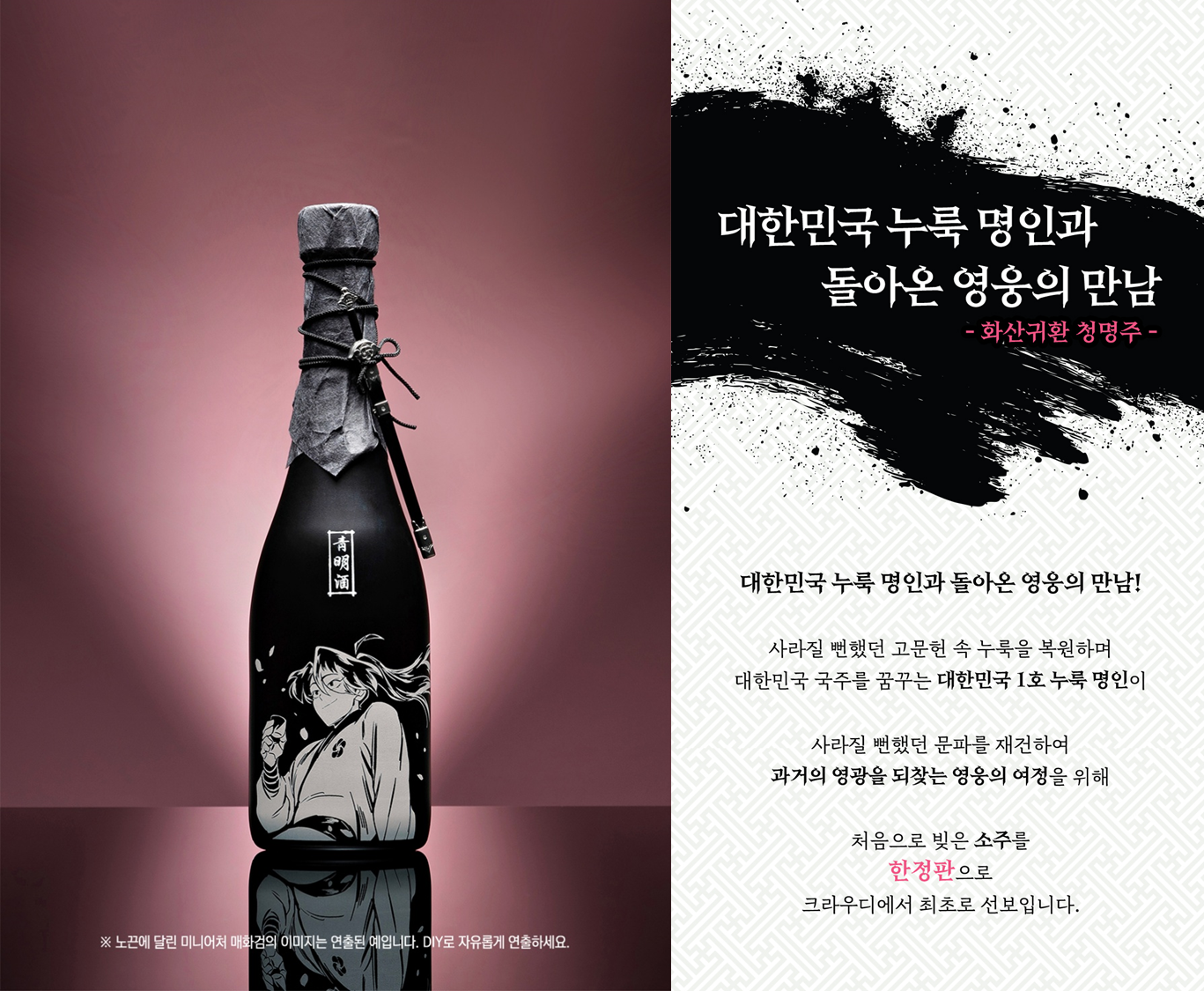
The best example illustrating this point is It is a collaboration between Naver Webtoon’s ‘Return of Hwasan’ and Master Han Young-seok.
Master Han Young-seok is a figure who has devoted himself to restoring traditional nuruk to the extent that he is called the ‘first Nuruk Master.’ And ‘Cheongmyeong,’ the protagonist of the Naver Webtoon, is also a character who revived a martial arts sect that was on the verge of disappearing.
Both characters share the common message of being ‘beings who revived traditions that were on the verge of disappearing.’
Furthermore, the traditional liquor made by Master Han Young-seok has a name that is like the protagonist. It is ‘Cheongmyeongju’.
Thanks to this natural connection of symbols, this collaboration unfolded in a way that the brand and character completed each other's stories without feeling forced.
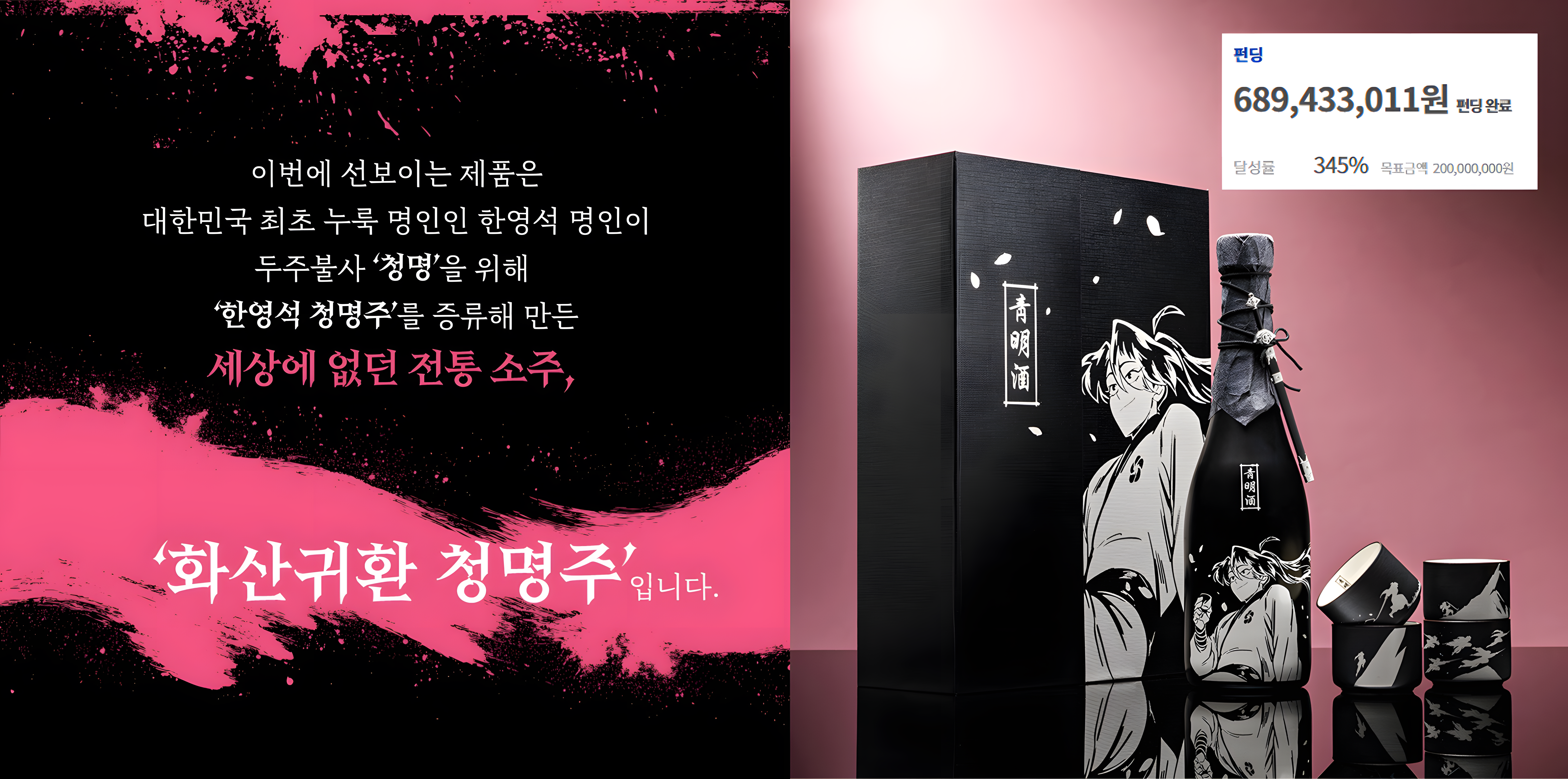
Consequently The ‘Hwasan Gwihwan X Cheongmyeongju’ collaboration garnered a great response from both the fandom and the traditional liquor market, recording a funding achievement of approximately 680 million won.
When the stories of the character and the brand naturally connect in this way, consumers perceive the collaboration as an ‘experience where the brand’s sincerity can be felt.’
Many brand partners want to collaborate with popular IPs for immediate short-term sales and attention.
However, just because you partner with a popular IP, not everyone succeeds in character collaborations.
The most important thing is, ‘Who can best tell our brand’s story?’
To find the answer to this, POP and POD must be considered.
Please keep in mind that POP establishes the brand's roots while POD opens up new possibilities, and that consumers become more captivated by the brand when these two are in balance!
You May Also Like

June 1, 2026
August 13, 2026
July 30, 2026
How about these characters?