
September 2, 2026
Merchandise utilizing character licenses typically has a fairly high selling price. In particular, the price is inevitably higher for limited editions or premium lines. This isIn addition to the production costs required to make the product, there is also the additional burden of IP royalties for using the character.Since it has to be done, the selling price of collaboration goods is bound to be high.

There are cases where there is a significant price difference even for merchandise featuring the same character. Among themDaisoA prime example is [brand name], which maintains affordable prices in the few thousand won range while utilizing highly recognized IPs such as Mickey Mouse, Winnie the Pooh, and Toy Story. So, how is it possible to sell character merchandise at such low prices while also bearing the burden of IP royalties? Today, I will explain the low-cost merchandise strategies of brands.
※Please use this information for reference only, and actual contracts and terms are subject to change depending on the specific case.※
To grasp the core of the low-cost goods strategy, you need to know about 'loyalty'.

To understand a brand's low-cost merchandise strategy, you must know the structure of loyalty, not the cost of a single product.
To use IP in a product, you must enter into a license agreement with the IP holder and pay IP usage fees. ThisRoyaltyIt is called that. What needs to be examined here are the Minimum Guarantee (MG) and Running Royalty included in the loyalty. To explain it briefly...The minimum guarantee is the minimum guaranteed amount paid to the IP holder regardless of sales volume.And running royalties are additional payments that must be made based on subsequent sales volume if total royalty sales exceed the minimum guarantee.
When determining royalties, minimum guarantees, and running royalties, the production and sales quantities are the key factors. Typically, when entering into a license agreement, royalty terms are negotiated based on the product's production or sales volume, as well as the retail or supply price.
Therefore, if the brand is capable of mass production and sales, a contract can be negotiated from the start based on a larger volume.Even when using the same IP, there are differences in the scope of negotiation for contract terms between a brand with an expected sales volume of 1,000 and a brand capable of selling 100,000, as the revenue the IP holder can expect and the market influence of the product differ.
When combined with reduced manufacturing costs from mass production and sales efficiency through an extensive distribution network, it becomes advantageous for lowering the overall cost of the product, including licensing fees.
In other words, the low-cost goods strategy cannot simply be viewed as ‘receiving royalties cheaply.’Because there is a distribution structure that allows for the production and sale of large quantities from the start, licensing terms can be negotiated based on the premise of mass sales, and even the cost per product can be reduced.is.
The reason we can compete on low prices is our 'distribution scale'.

Most brands employing a low-cost merchandise strategy possess overwhelming sales channels, combining nationwide stores and online malls. With such a distribution scale, they can plan products from the outset with the assumption that they will sell in large quantities. It is easy to understand if you think of them operating in a manner similar to a wholesaler.A structure that generates profit from total sales volume by buying in bulk and selling in bulk, rather than taking a small margin per unit, instead of making a large margin on a single product.no see.
Conversely, if a brand with few physical stores or selling only small quantities through a single online channel signs a contract with the same character and conditions, the burden of royalties and sales will inevitably become much greater.If you lower the selling price when there is no way to increase sales volume, it only creates the risk of a negative margin structure where you cannot even cover licensing costs.
In other words, low-priced goods areHow much merchandise can be sold through a distribution network?It is a matter that depends on the situation. Simply having a large number of stores or many visitors to the online mall is not the only important factor. Whether a category has frequent repurchase rates or a high turnover rate is also a factor that ultimately determines how much is sold.
Check Point
▪️ How many distribution networks does it have?
▪️ How many visitors does the online store have?
▪️Is it a product with a high repurchase rate?
▪️Is it an item that frequently sells out or is it a popular product?
If you are a brand partner, you need to calculate this structure in advance.
✔️ Calculate estimated sales volume first before considering a collaboration
The first thing you need to do before choosing a collaboration IP isHow much of this product can we sell on our channel?It is an estimation. If the expected sales volume is not large, a low-priced merchandise strategy might not be the right direction in the first place.
In such cases, rather than lowering the selling price, reduce the quantity and set a higher unit price.Small Quantity, High-Price Goods StrategyIt is safer to change direction to.
✔️Calculate actual costs
In a license agreement, regardless of sales volume, the next step is to examine the license terms. It is difficult to determine the actual costs by simply checking "what is the royalty rate?"On what basis are royalties calculated, what is the minimum guarantee and the brand's projected sales, and what is the cost per product based on projected sales volume?You must calculate up to that point together.
✔️Setting an appropriate selling price
You should also be careful not to set the selling price too low just because the goods are low-cost. You must determine an appropriate selling price after calculating all costs incurred in selling the product, such as production costs, royalties, packaging and logistics costs, and sales commissions.Especially for brands without a large-scale distribution network, it is more important to determine price and quantity based on the sales volume the brand can secure, rather than simply chasing low selling prices.
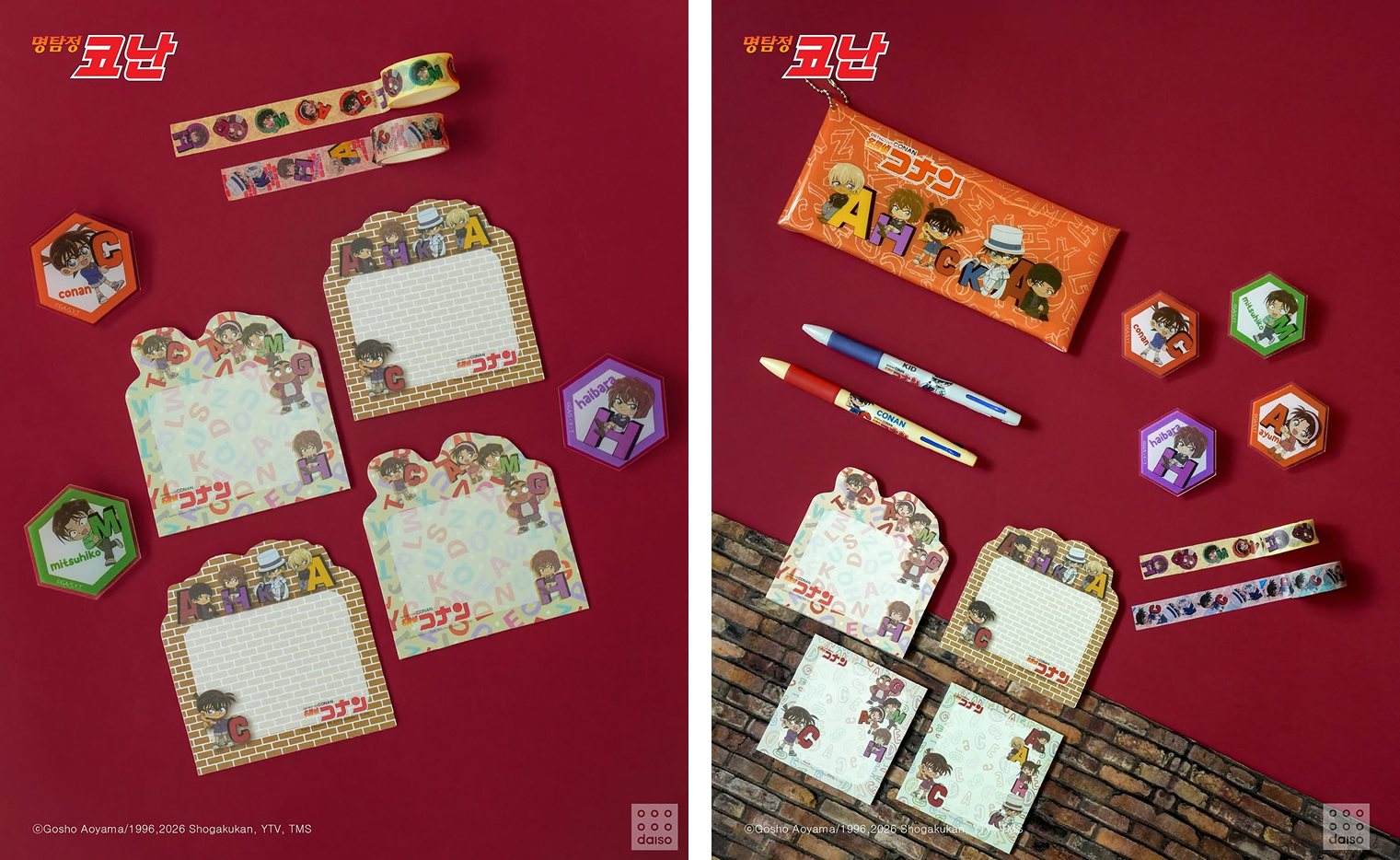
Ultimately, the price competitiveness of character collaborations is not created by IP alone.A low-cost goods strategy can only be established when projected sales volume, licensing terms, production scale, and distribution channels align.
At Inner Booth, you can explore IPs for collaboration based on the products, target audience, and sales volume desired by brand partners, and connect them with licensing partnerships with IP holders. If you are still unsure which IP to collaborate with and on what scale, try starting by determining your sales volume and price range first, rather than choosing a character; then, begin by finding an IP that fits those criteria.
You May Also Like

June 1, 2026

August 13, 2026
June 8, 2026
How about these characters?