
August 11, 2026
Nowadays, AI image generation services have advanced to the point where they can quickly create images with a similar atmosphere by referencing just a single character image.
As such, IP holders cannot help but worry about whether the characters they created are being used for AI training.
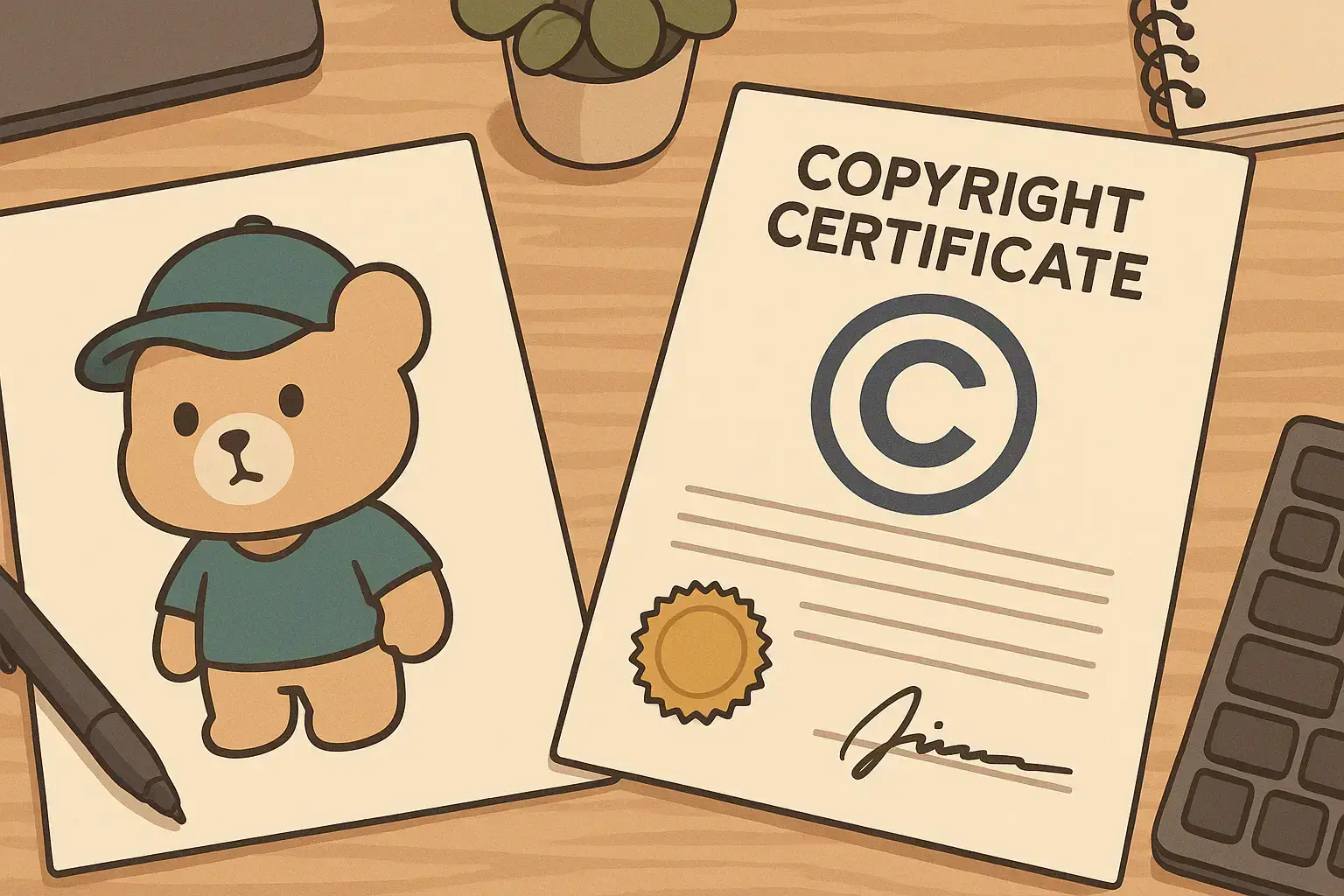
The problem is that it is difficult for the creator to directly control images released on the internet.are you.
In particular, it is not easy for IP holders to directly verify where images published on social media or websites were collected and what data they are included in.
However, you cannot immediately conclude that it is copyright infringement simply because a similar image was created.
This is because, unlike text, it is difficult to simply compare the original and the result in drawings, and the judgment can vary depending on whether the specific expression of the character has been reproduced or if the art style is merely similar.
Therefore, rather than viewing this issue simply from the perspective that ‘AI took my painting,’How to protect my creative work now and how to prove my rights laterWe need to think about that together.
It is too late to wait until legal standards are established.

The relationship between AI learning and copyright has not yet been established by a single clear standard.
While lawsuits between AI companies and copyright holders are ongoing overseas, court rulings vary depending on the specific facts of each case, as learning methods and usage patterns differ.
The UK lawsuit between Getty Images and Stability AI is a prime example.
The court did not recognize some of the copyright infringement claimed by Getty Images, but acknowledged trademark infringement in the parts where Getty's watermark appeared on AI-generated images.
The important thing in this case is not the conclusion that ‘AI learning is legal.’
The point is that how copyrighted works were used during the learning process and whether the results generated by AI infringed upon existing rights must be examined as separate issues.
In that case, is there nothing the IP holder can do either?
You can apply protection to the image itself.
The first method to consider is applying technical protection to the image itself.
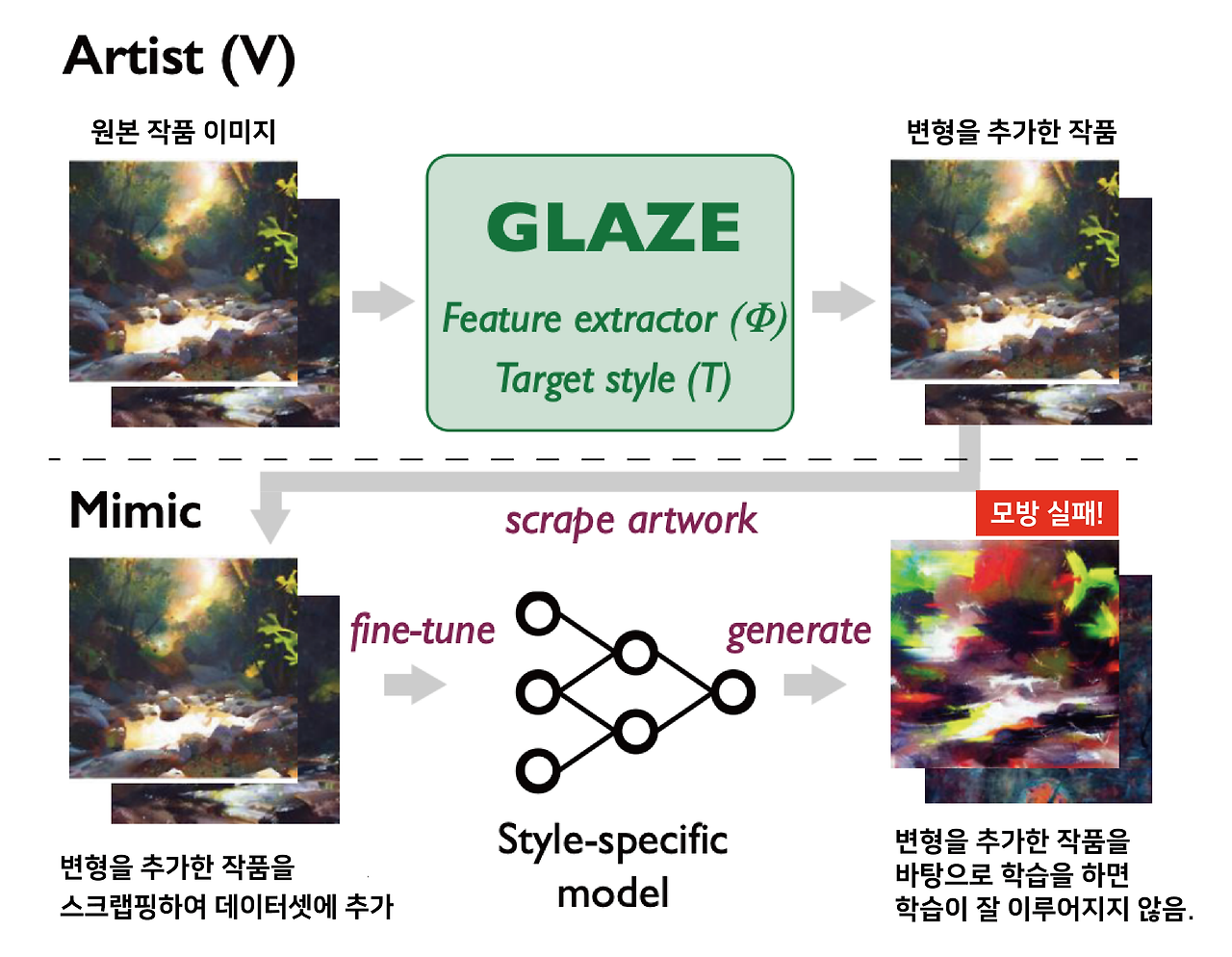
A well-known example is the one developed by a research team at the University of Chicago.GlazeIt is.
It is a method that makes it difficult for AI to imitate a specific artist's style by applying transformations to images that are hard for the human eye to detect.
of the same research teamNightshadeYou can also give an example.
Nightshade aims to influence the model's training process when the image is used for AI training by applying specific transformations to the image.
However, the important thing here is that you shouldn't think of these two technologies as 'AI learning blocking tools.'
Since AI models and learning methods are constantly evolving, it is difficult to say that a specific technology will guarantee the same effect in the future.
Therefore, when releasing new images, utilize these technologies additionally, butUsing other protective measures rather than relying on a single methodThis is realistic.
💬 There is also a way to leave the creator's name and intent to use on the image.

Another method is to link creator information and usage intentions to the content.
A representative technology is Adobe'sContent CredentialsIt is.
You can link information such as the creator and production process to images, and also display content usage preferences related to generative AI learning.
While this method does not legally block the learning of all AI companies, it is meaningful for services that verify and comply with the relevant information, so it is recommended to use it in conjunction with other protective measures.
🎨 IP holders, start managing your future creations.
It is not realistically easy to protect all previously released images at once.
In that case, it would be a good idea to try applying it one by one, starting with the new releases to be unveiled in the future.

For example, you keep the original working files separately and record the initial release date and release channel of the final image.
If you have the process of developing the character or the history of design changes, it is a good idea to keep them together.
If necessary, you can also consider separate rights protection procedures, such as copyright registration.
Such records are not a technology that prevents AI learning.
However, when an image similar to my character appears later or rights issues ariseData showing when I have created and used the characterIt can be.
Ultimately, IP protection in the AI era does not end with ‘preventing someone from learning my images.’
You need to prepare to prove the fact of creation and also consider, to the extent possible, clearly indicating how you do not want your content to be used.
Brand partners must also check the IP management status before collaborating.
This issue does not apply only to IP holders.
If you are a brand partner preparing merchandise or campaigns using character IP, you also need to examine how the IP you intend to collaborate with is being managed.
In particular, if similar images generated by AI are widely circulated online, the official characters and unofficial images may mix, potentially blurring the brand's intended message.
If a brand intends to expand its business by utilizing characters in the long term, it should not stop at simply verifying whether the IP is highly recognized, but...How systematically rights relationships and creative records are managedIt is a good idea to look into that as well.

It is highly likely that standards surrounding AI and copyright will continue to change in the future.
So, what is important right now is not finding a single perfect answer.
Just like applying necessary protection measures when releasing images and consistently documenting the creative process and original materials.Establishing a habit of managing my IP at multiple levelsThis is the most realistic response we can take right now.
You May Also Like
January 7, 2026
May 28, 2026
November 26, 2025
How about these characters?