
December 10, 2025
The biggest challenge for IP holders and brand partners when starting a collaboration is the complexity of the procedures and the numerous details that need to be verified.
Therefore, many IP holders and brand partners often feel at a loss as to where to start and what to prepare.
However, if you follow the actual flow of the IP business, you can quickly see that every stage is closely interconnected and moves toward a single consistent goal.
So today, to help you understand the flow most naturally, I will explain how collaboration starts and the stages it goes through to be completed from start to finish, like a single journey.
Collaborations usually start with a brand partner saying, "I want to create a product with this IP" or "I want to collaborate with this character."
However, from the IP holder's perspective, there is something that needs to be verified before the proposal itself.
It is the basic information, "What kind of company is this brand?"
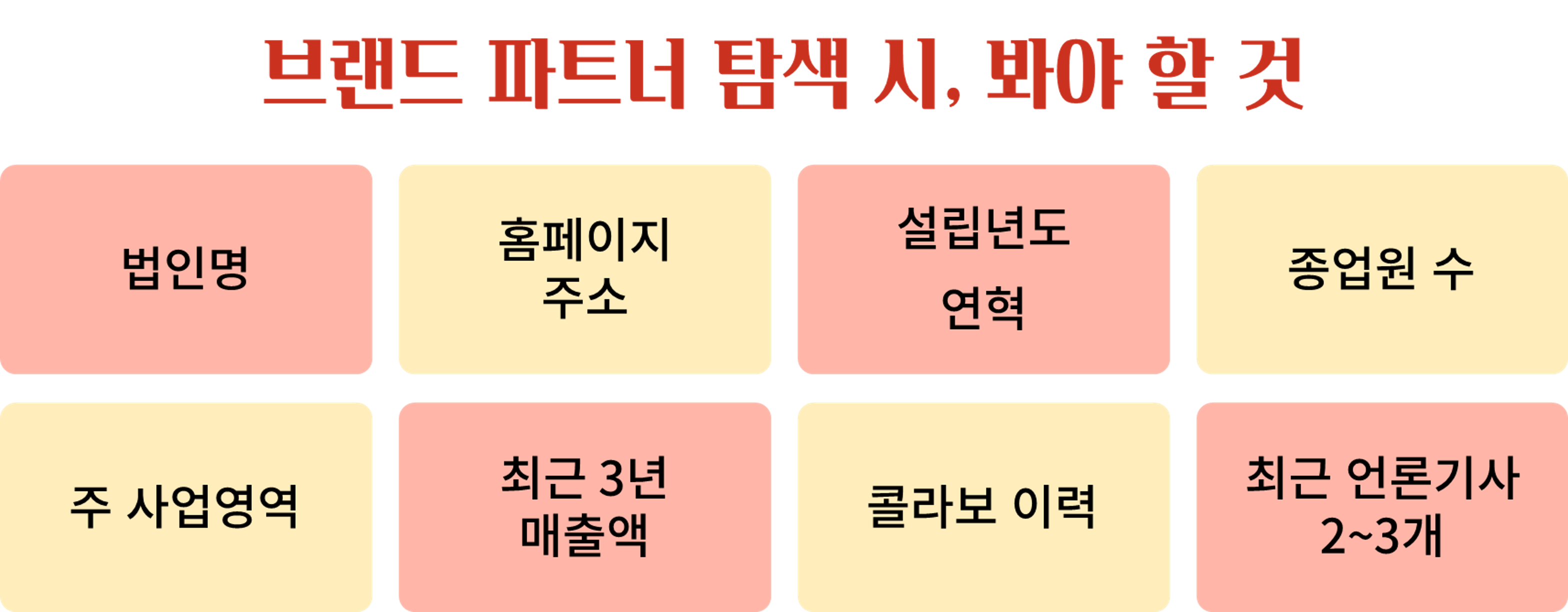
This is not merely a simple history check, but the most basic safeguard for determining whether future collaboration can proceed stably.
Information such as a company's business scope, recent sales, and past collaboration experience demonstrates a brand's operational capabilities and credibility, serving as a foundation for properly starting a collaboration.
The clearer this information is, the less unnecessary misunderstandings or risks will arise in the future, so you must make sure to check it thoroughly.
Once you have a basic understanding of the brand, you can finally take a look at the proposal.
However, even at this stage, you should not make a decision based on the fact that 'the proposal looks good,' but rather make a judgment by considering both long-term strategy and short-term performance.
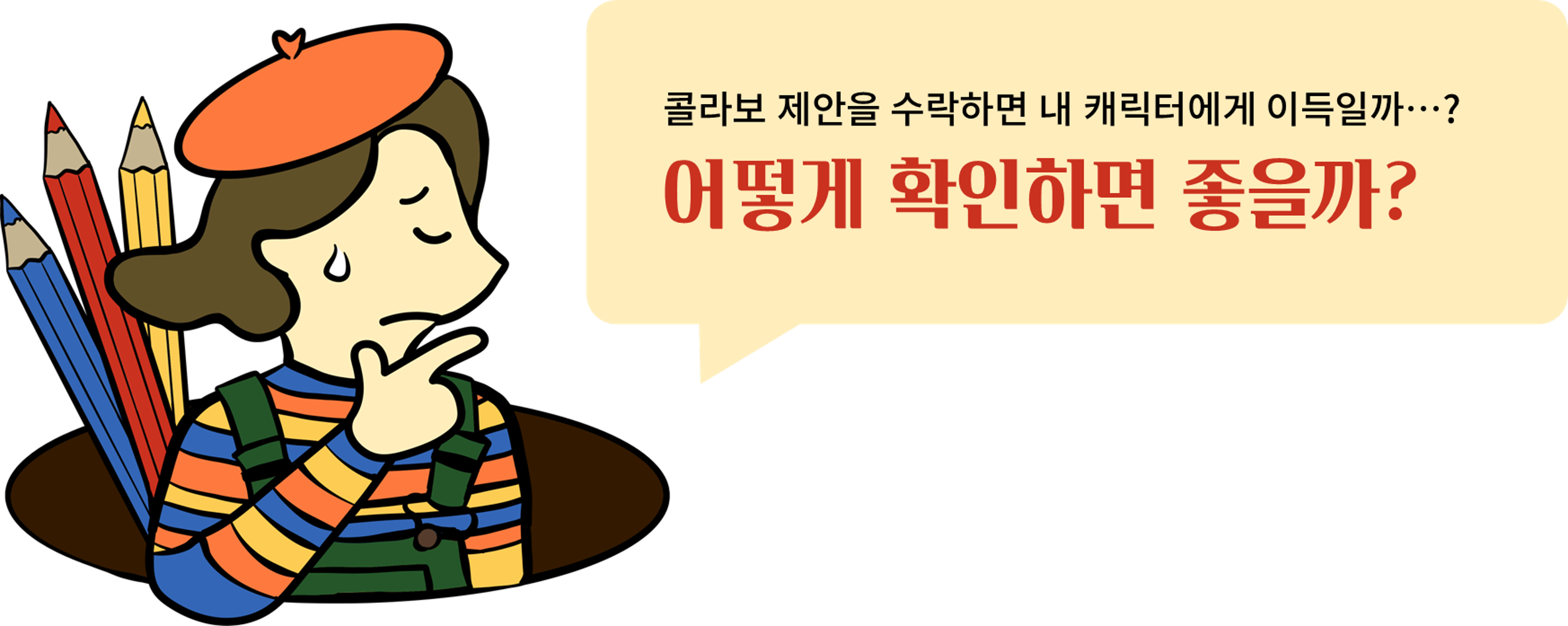
At this stage, the IP holder evaluates the value of the proposal based on five criteria.
✔️ ROI (Return on Investment): Whether there are sufficient results and opportunities compared to the input
✔️ Strategic fit: Whether it aligns with the direction the IP pursues
✔️ Market and Opportunity Size: Whether it could lead to actual business opportunities
✔️ viability: Whether it can proceed without difficulty with current resources
✔️ Partner Trust: Whether to maintain a stable relationship during the collaboration process
The reason we check all these criteria is that character collaborations must not be one-off events, but rather a structure that allows for mutual growth while protecting the asset value of the IP.
These criteria must be met for it to naturally lead to the next step.
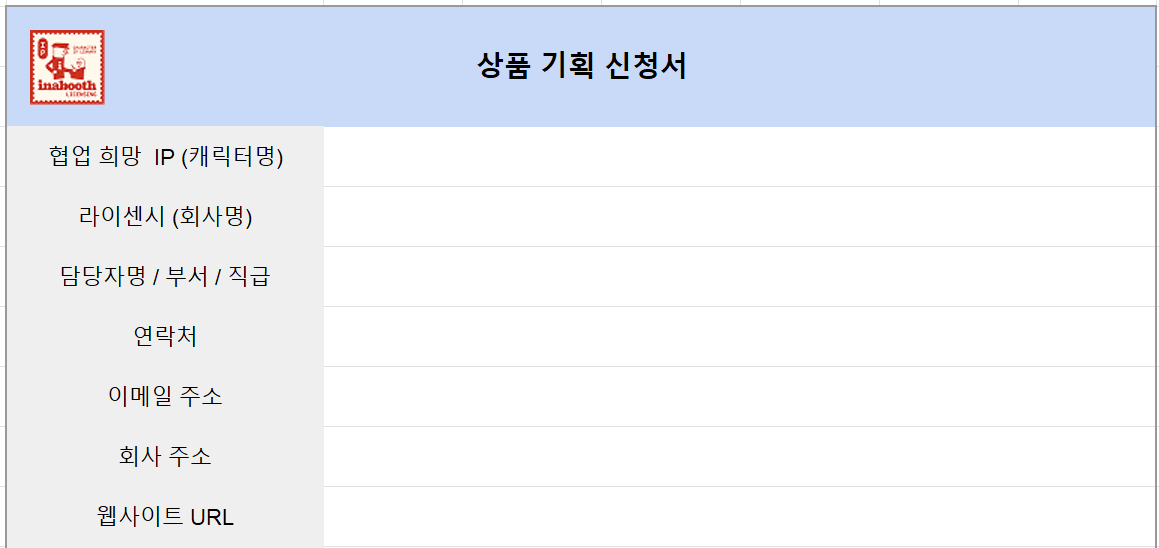
If the proposal is deemed suitable for the character, the brand partner will then submit a detailed commercialization plan.
This proposal is not merely an idea document, but rather a document that serves as the standard determining all future approvals, contracts, and launches.
When reviewing the proposal, we examine whether there are any conflicts with existing contracts, whether it aligns with the IP brand image, and whether the product concept is realistically feasible.
This process can be described as not merely determining approval, but rather finely coordinating the direction of collaboration.
Once the proposal is approved, it leads to negotiations on contract terms to further refine the framework of the collaboration.
At this stage, detailed conditions to ensure the stability of collaboration are established.

Contract period, region, exclusivity, distribution scope, and settlement method are all criteria designed to reduce misunderstandings and minimize risks during the collaboration process.
In particular, setting a Minimum Guarantee (MG) is an important indicator that demonstrates a brand partner's commitment to collaboration and serves to guarantee the minimum value of the project.
Once these conditions are finalized, the actual contract is drawn up and becomes legally binding upon the signatures of both parties.
From this moment on, collaboration is no longer a relationship maintained solely by mutual loyalty, but becomes a state where it can proceed stably within a clear contract.
Just because a contract has been signed does not mean production will proceed immediately.
Since character IP is an asset where meaning is embedded in every single image and color, the production approval process is the most important step in determining the quality of the collaboration.

The approval process naturally unfolds in a total of three steps.
First approvalReview whether the design draft complies with the IP guidelines
Second approval: Check the quality and finish of the sample
Final Approval (P.O.P): The final stage of authorizing production and release
The reason this process exists is to protect the IP's brand assets from being damaged.
The approval process must be stable so that the subsequent stages after production and launch can flow naturally.
Once the product is launched, the collaboration transitions to the ‘maintenance’ phase rather than the ‘closing’ phase.
The Brand Partner submits quarterly sales reports and invoices for settlement, and the IP Holder calculates royalties based on this.
Since the settlement phase is key to maintaining the transparency of collaboration, the more stably this process is maintained, the stronger the trust becomes between IP holders and brand partners.
This lays the foundation for the next step, ‘follow-up collaboration,’ to naturally follow.
Once settlement and sales analysis are complete, the IP holder evaluates the collaboration performance based on data and market response.
If positive results are achieved here, it naturally leads to discussions on follow-up collaborations, such as proposing IP for the next season, expanding categories, and broadening the scope of exclusivity.
In other words, collaboration is not just a one-off project, but a structure that can grow into a long-term partnership based on transparent operations and stable procedures.
IP collaboration may seem complex at first glance due to the many steps involved, but in reality, every process is organically connected toward a single goal.
Therefore, if you understand this big picture, IP collaboration becomes much more predictable, and even beginners can prepare for it stably.
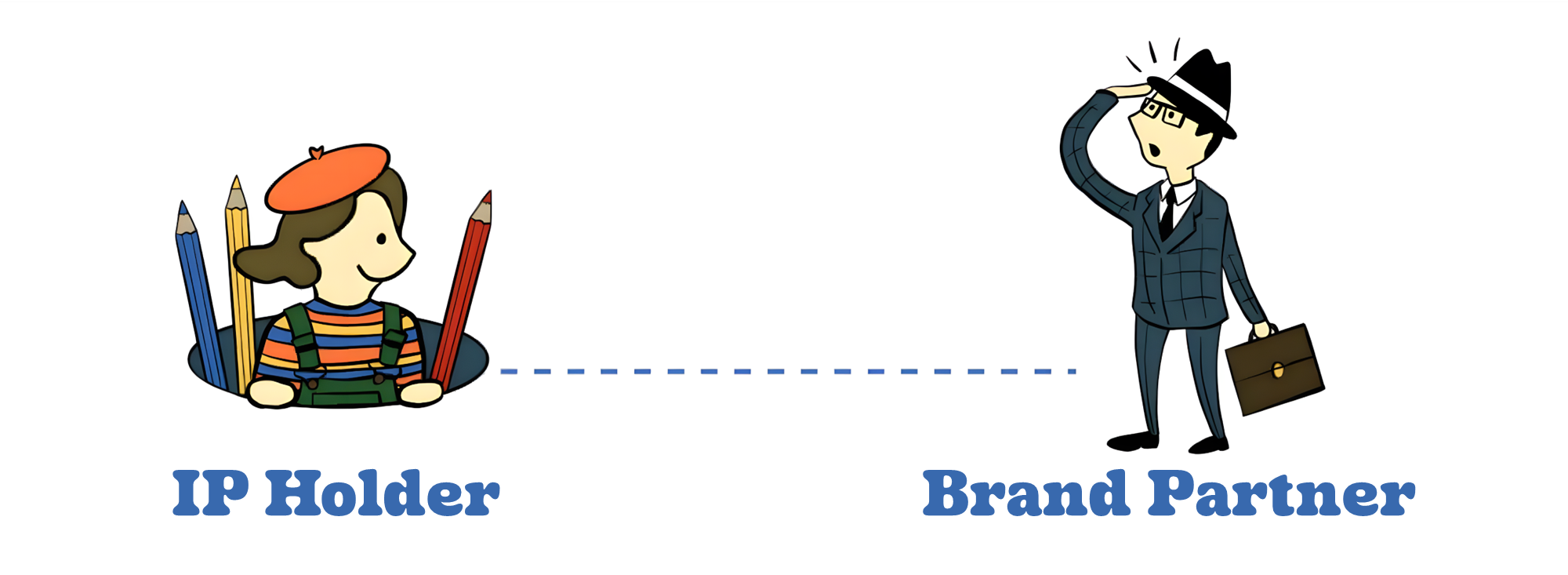
Even if the collaboration process is too difficult and complicated, don't worry too much, as there are platforms like Inner Booth that help make contracts easy💫
Innerbooth is constantly striving to create an environment where both IP holders and brand partners can collaborate with peace of mind.
In particular, we systematically provide essential information and real-world case-based insights for the collaboration process so that even those new to IP business can proceed without feeling lost.
We plan to continue sharing useful information, so please feel free to proceed with character collaborations without being too afraid.
You May Also Like

August 18, 2026

August 11, 2026
January 7, 2026
How about these characters?