
October 31, 2025
📜 A Practical Guide for Stakeholders: From Contract Structure to Approval Process
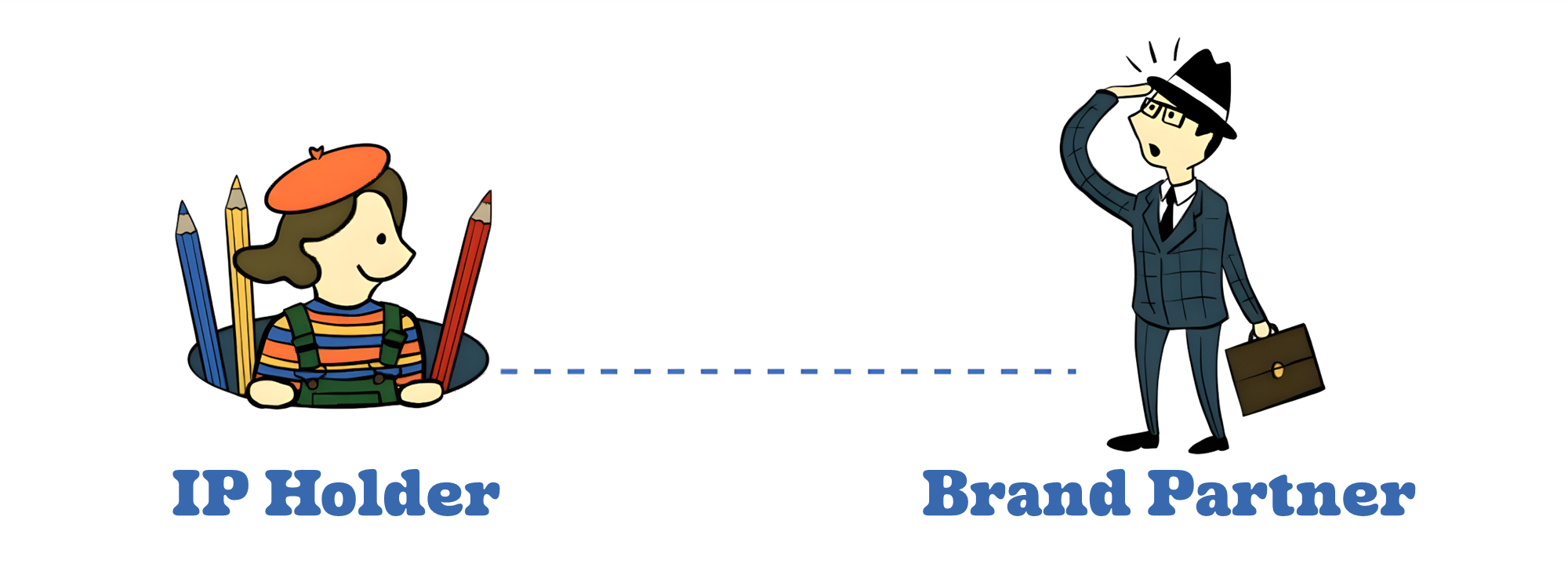
IP (Intellectual Property) licensing is not simply a contract to borrow characters or designs, but a collaborative structure that creates new market value by combining the creative assets of the IP holder with the commercial capabilities of a brand partner.
However, in practice, it is often unclear 'what should be discussed first and how far the negotiations should go.'
In this article, we have summarized contract procedures and collaboration guidelines based on global standard IP agreements that both IP holders and brand partners can refer to.

An IP license agreement is a legal document that clearly agrees on the rights, scope of use, and settlement structure between the IP holder (copyright holder) and the brand partner (user).
The general procedure is as follows 👇
step | detail |
|---|---|
① Prior consultation (Negotiation) | Discussion of IP utilization purpose, duration, region, product family, and revenue/settlement structure |
② Agreement Signing | Specify scope of rights, royalties, approval procedures, and termination conditions |
③ Content Planning and Approval (Content Approval) | Review of design/content draft, feedback, and final approval |
④ Product Production and Launch | Product production and distribution after approval |
⑤ Sales Settlement and Reporting (Royalty Settlement) | Sales data reporting and settlement |
🔍 Why particularly famous mega-IP holders request 'preliminary planning proposals'
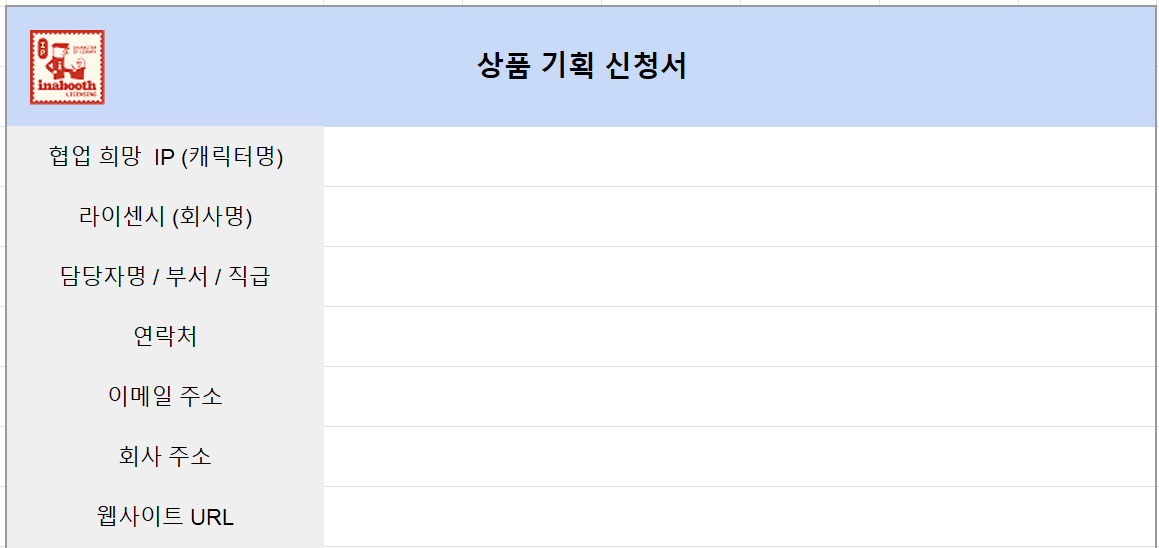
Many brand partners ask, "Why do I have to submit a commercialization plan before signing a contract?"
This procedure is not merely a formality, but an essential step to secure mutual trust and the commercial stability of the IP.
1️⃣ Preventing category duplication
From the perspective of the IP holder, there may be cases where they are already in discussions with other brand partners regarding the same or similar product categories.
Therefore, reviewing the plan in advance can prevent duplicate contracts or conflicts of rights.
This is also a process of maintaining the distribution order of IP holders and protecting the exclusive value of brand partners.
2️⃣ Review of Brand Consistency
We verify how the IP is interpreted and what concept it will be used to ensure that the IP's worldview and visual direction are not compromised.
This is not a simple review, but an adjustment process designed to maximize the synergy between IP and brand.
3️⃣ Prevention of fraudulent contracts and unauthorized use
In some cases, there are instances where individuals feign an intention to collaborate to preempt IP images or attempt to produce products prior to a contract.
The IP holder identifies whether the brand has the actual will to execute through a review of the proposal and prevents fraudulent contracts or forgery and theft.
💰 Reasons for setting a Minimum Guarantee (MG)

The reason IP holders require a Minimum Guarantee (MG) when signing a contract is also closer to a mechanism to verify the sincerity of the partnership rather than a financial burden.
The minimum guarantee is an advance payment guarantee indicating the intent to execute the contract, serving as the basis for judgment to prove the brand partner's intention and responsibility to actually proceed with the project.
From the perspective of the IP holder, this can prevent contracts where the IP is excessively abused or not released due to short-term interest or market testing.
Conversely, brand partners can secure the right to preempt specific categories through a minimum guarantee, which benefits both parties.
If the scope of IP utilization is unclear, there is a high likelihood of disputes arising after launch.
Therefore, the following three items must be discussed and specified in the contract.
Areas of application | Specific examples |
|---|---|
Product Manufacturing | Production of products such as toys, clothing, stationery, and merchandise |
Sales Channel | Online stores, offline stores, pop-up stores, distribution partners |
Promotional Content | Social media posts, video advertisements, participation in exhibitions/fairs, etc. |
TIP
It is important to clearly define the purpose and scope of use.
ex. The creation of promotional content is permitted, but prior approval is required for exposure in third-party sponsored videos.

The core of an IP licensing agreement is ultimately the design of the revenue structure.
division | explanation | General example |
|---|---|---|
Minimum Guarantee (MG) | Minimum guaranteed amount paid in advance upon signing the contract. Refunds are not available regardless of the brand partner's sales. | Down payment 5,000 USD |
Royalty | Settle a certain percentage of actual sales (Net Sales) | 5%~12% level |
Sales Report & Payment | Submission of quarterly sales report → Invoice issuance → Payment | Settlement every three months |
TIP
It operates on a Minimum Guarantee (MG) + Royalty Offset structure.
In other words, additional royalties are generated only when sales exceed the initial minimum guarantee amount.
Approval is required for IP-based product collaboration.
We follow the following steps to allow brand partners to plan freely while maintaining the IP holder's brand consistency.
step | detail | Points for discussion |
|---|---|---|
① Design Planning | Brand partner company conceptualizes the initial draft | Concept, color, variation range |
② Submission of Draft | Request review from IP holder | Compliance with style guide |
③ Revision Feedback | Supplement after mutual consultation | Specify number of revisions and period |
④ Final Approval | Production possible upon written approval from the IP holder | “Production after approval” principle |
⑤ Product Launch | Online and offline sales after retaining approval history | Includes post-monitoring |
IP collaboration requires meticulous management from both legal and brand perspectives.
The following items are key policies that must be agreed upon in writing during collaboration.

item | explanation |
|---|---|
Copyright Ownership | The copyright of the creative work belongs to the IP holder, and the Brand Partner is granted only a usage right. |
Brand Integrity | Adhere to the guidelines to avoid damaging the IP's worldview, tone and manner, and visual style. |
Approval Policy | Samples, content, promotional materials, etc. will be disclosed after prior approval. |
Distribution Control | Prior written approval is required for unauthorized consignment, redistribution, or overseas sales. |
Transparency in settlement | Brand partners must submit sales reports and supporting documents. |
Sustainability | Aiming for long-term collaboration with a shared goal of increasing IP value and brand product value rather than short-term sales. |
The essence of an IP license agreement is not ‘permission to use’ but ‘co-creation.’
In exchange for granting rights to the brand partner, the brand partner plays a role in jointly expanding the commercial value of the IP.
Ultimately, a good IP agreement is one that does not encroach on each other's territories while
It is a 'collaboration framework' designed to enable brands to grow together.
You May Also Like

August 18, 2026

August 11, 2026
January 7, 2026
How about these characters?